
How to Rank Higher in AI SEO & GEO Search Results
The Secrets to Increase Rankings on ChatGPT, Google, and Bing
Have you looked for one of your best articles on Google lately, and just felt your stomach drop?
You might see your content – your own words, but half the time they’ll be repackaged inside an AI Overview. No link. No click. Just a clean paragraph that makes your work invisible.
That’s the reality now. It’s not competitors stealing and repackaging your work. It’s AI. On a broad level, search isn’t even “search” anymore. It’s machines summarizing, rewriting, and deciding which voices get heard. If you’re not part of that conversation, you’re done.
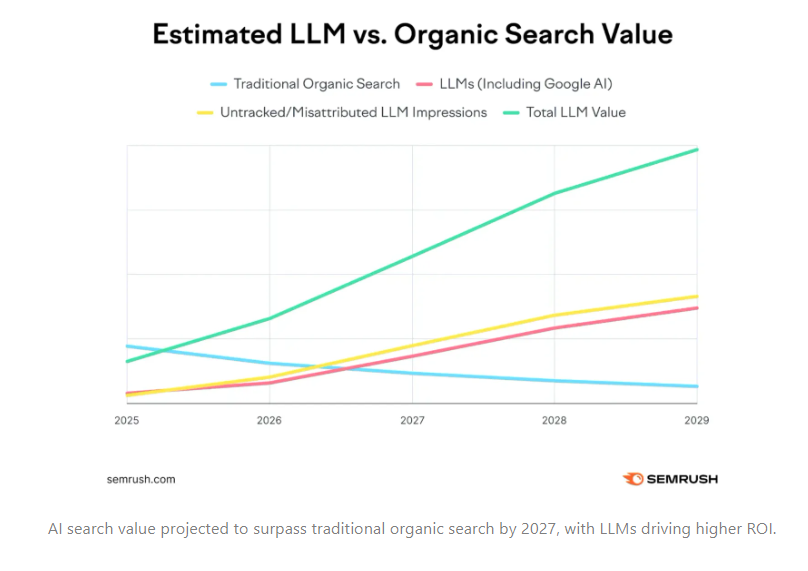
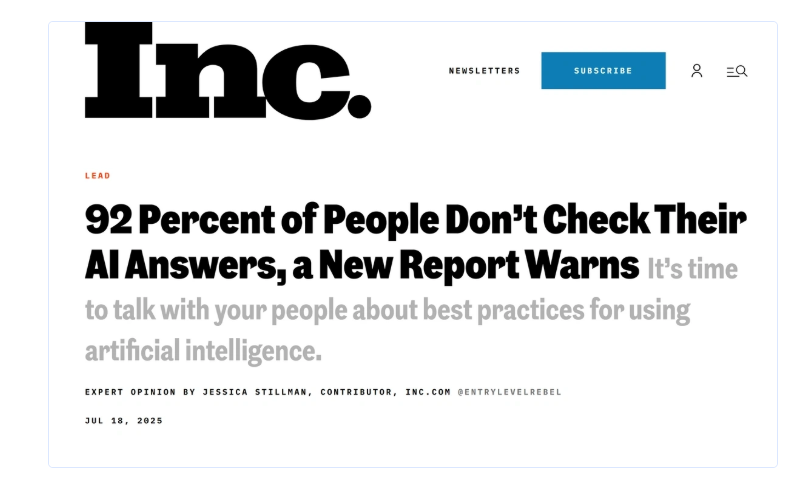
As an AI SEO marketing agency, we’ve seen the data that proves it. In 2025, Google’s share of everyday searches fell from 73% to 66.9%, while ChatGPT’s jumped from 4.1% to 12.5%. BrightEdge says AI search visits are exploding, but Exploding Topics found that only 8% of people actually click the sources under those AI answers. The rest never make it past the summary.
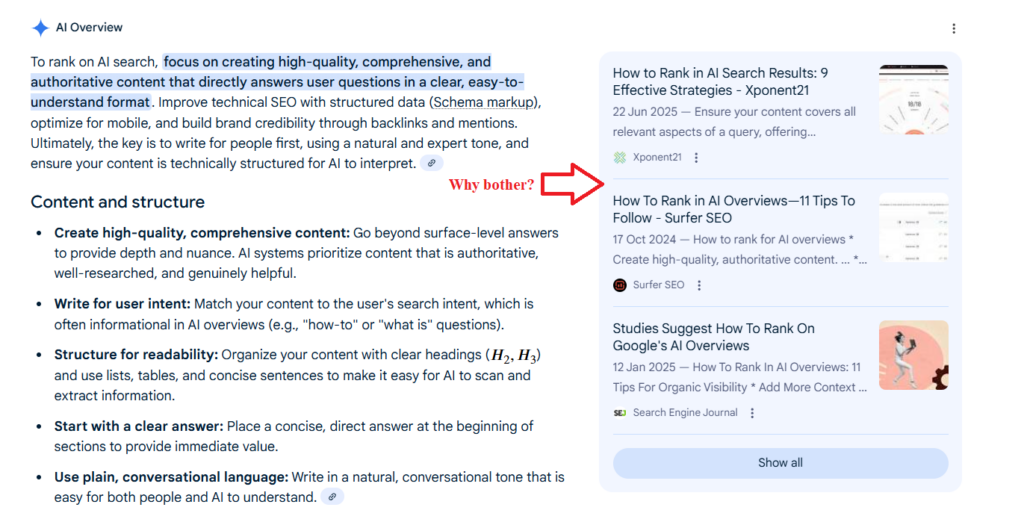
It’s frustrating, sure, but it’s also an opening.
Because we’ve learned that brands that adapt can rank in AI search results and build lasting AI visibility even without the click. AI traffic might be smaller, but it converts 4.4× higher. These visitors don’t browse; they buy.
This guide is everything we’ve learned about surviving that shift. It’s the field notes from dozens of tests, wins, and faceplants.
The main lesson you’ll take away? The game has changed. You don’t outrank AI anymore; you teach it to trust you.
Today’s search engines (and the AI interpreting them) care less about keywords and more about usefulness.
How to Rank in LLM Seach Engines
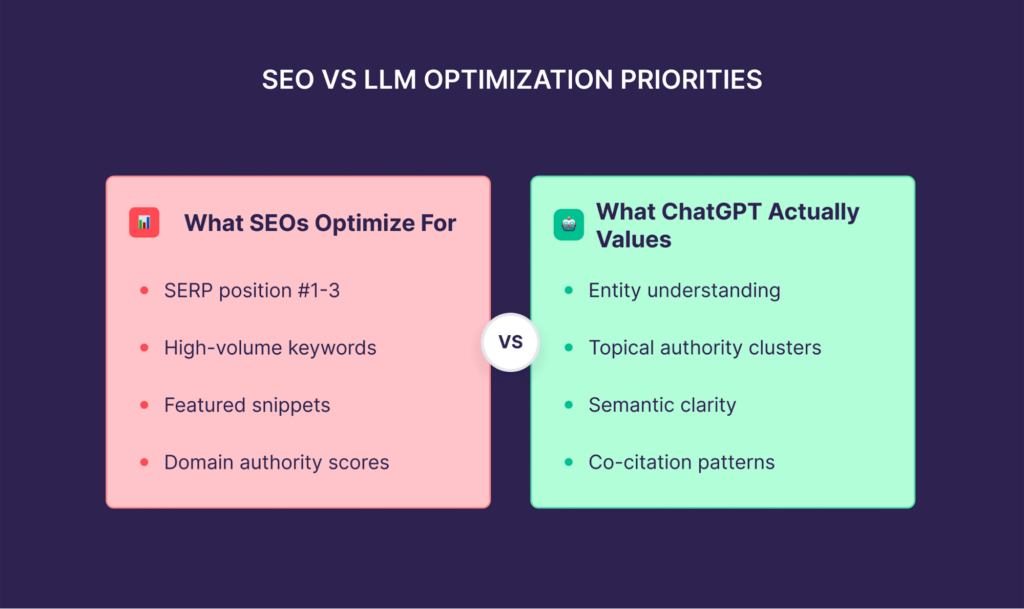
The first thing you need to know right now? SEO is different. For the last twenty years, everyone focused on optimizing for keywords and building backlinks.
Today, AI search engines don’t care about that. They provide a single, synthesized answer — one that’s backed by hundreds of sources.
Think of this as the bridge between traditional SEO and the AI era.
As an AI SEO marketing agency, we help brands practice LLM SEO (Large Language Model SEO) — making your brand discoverable inside AI-generated answers, not just on search results. Here, you’re optimizing to be included, not just ranked.
Traditional SEO chased clicks. LLM SEO earns inclusion.
By 2026, analysts project that one in four searches will happen through chat interfaces like ChatGPT, Perplexity, Gemini, Claude, and Copilot. And here’s the wild part: over half of Gemini’s AI Overview links already come from sites outside Google’s top 10.
So, if you’re wondering whether SEO still matters, the answer is yes — but the field is bigger. You’re no longer just competing for the SERP. You’re competing for a place inside the answer, and a skilled AI SEO marketing agency can help you get there.
The three layers that drive LLM visibility (more on these soon)
|
Layer |
Goal |
Focus |
|
AEO |
Get featured |
Structure your answers so AIs can quote you. |
|
GEO |
Get cited |
Build brand consistency across platforms and publications. |
|
AIO |
Get engaged |
Write clearly, conversationally, and with genuine expertise. |
The opportunity here? Massive.
ChatGPT has nearly 200 million users who rely exclusively on its directive. Perplexity AI’s traffic surged 12 times in 2024 (with 70% of answers including synthesized responses before links)
50% of the links AI overviews give you on Google actually don’t come from the top ten links on the organic search results. You’re not fighting for clicks, you’re fighting for inclusion.
Remember when “getting found online” meant landing on page one of Google? That used to be the whole game. Now, you can be #1 and still invisible, buried beneath an AI answer, a bunch of suggested ideas, or a chatbot’s summary that politely thanks you for your contribution, then forgets to mention your name.
Welcome to ranking in the age of AI, where attention is no longer linear; it’s layered.
An Explanation on Ranking in AI Overviews
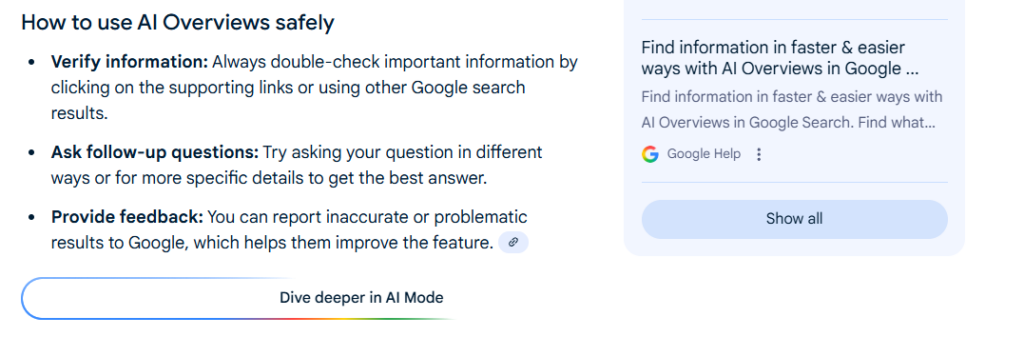
AI search comes in different forms.
On one side: Google AI Overviews and Gemini’s “AI Mode”, built into the search results, blending answers, ads, and citations.
On the other: conversational engines like ChatGPT, Claude, Perplexity, and Copilot, which skip the SERP entirely and deliver packaged insights straight to users.
Only 7.2% of domains appear in both ecosystems. In other words, even if Google sees you, the LLMs might not, and vice versa. If you’re optimizing for one, you’re leaving half the game on the table.
That’s what makes modern AI and SEO so tricky. It’s no longer “write good content, get backlinks, climb the ranks.” It’s “teach multiple AIs to trust you.”
Think of it this way:
- Search engines reward structure and authority.
- AI models reward consistency and consensus.
The overlap is where real visibility lives.
Mentions come from what models learn in training data and off-site references. Citations come from what search APIs surface in live AI Overviews. You don’t just optimize for Google; you teach models to remember you.
What counts as “AI visibility”
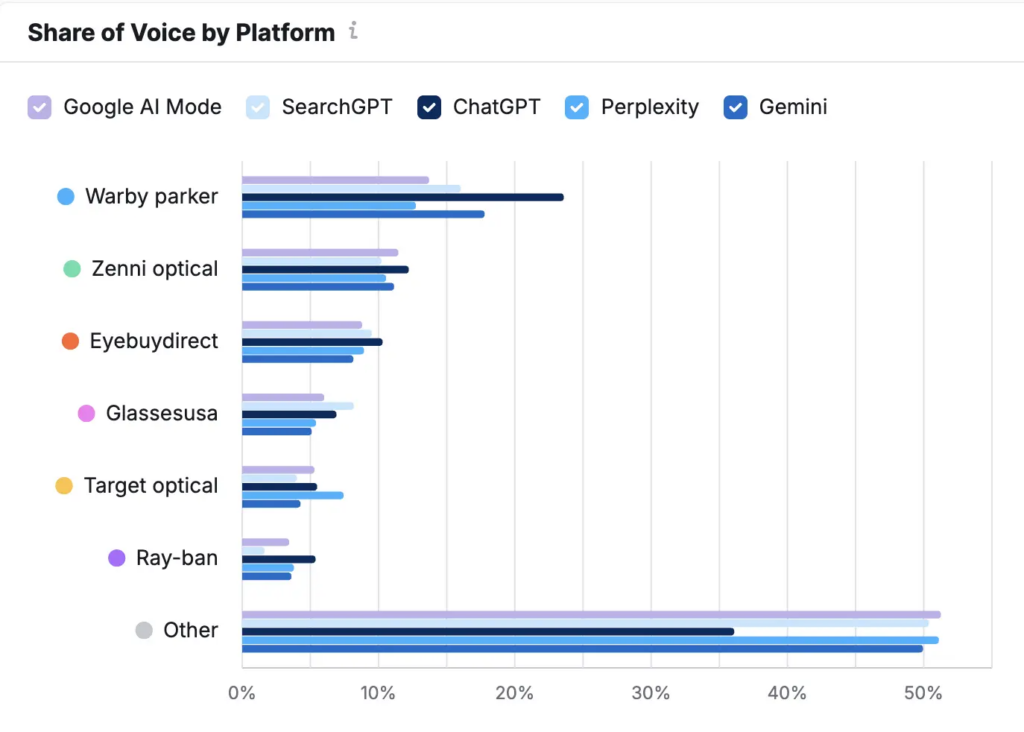
Let’s get clear on what we’re chasing.
|
Signal Type |
Example |
Value |
|
Citation |
Your link appears as a source in an AI Overview |
Direct authority + traffic |
|
Mention |
Brand or expert name is referenced without a link |
Trust + recognition |
|
Paraphrased Insight |
Your idea or data appears, no credit |
Invisible impact — but still feeds perception |
AI visibility isn’t about clicks; it’s about being used as the answer.
This is where E-E-A-T (Experience, Expertise, Authoritativeness, Trustworthiness) becomes your machine-readable credibility signal. Add author bios with credentials, cite original data, and show transparent publication dates. AIs reward credibility the same way people do, through proof.
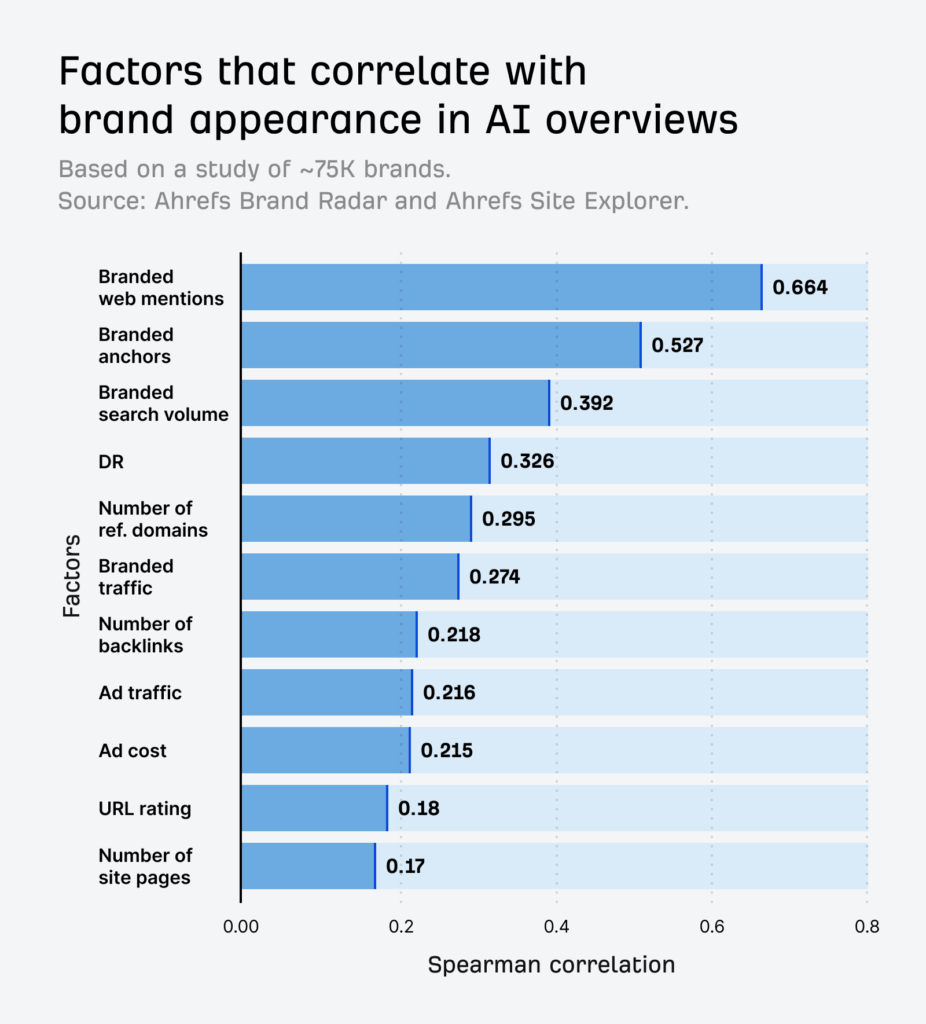
A recent Ahrefs study analyzed 75,000 brands and found that brand mentions have a 0.664 correlation with being featured in AI Overviews, while backlinks barely moved the needle at 0.218. Translation: the old SEO fuel (links) has been replaced by conversation fuel (mentions).
Brand24’s 2025 analysis backs it up: brands in the top quartile for mentions appear 10× more often in AI answers than those with fewer mentions. The more your name appears in credible contexts, the more likely you are to show up in AI-generated responses.
That’s why visibility now lives off-site: forums, Reddit threads, industry communities, press quotes, review platforms: the places where AIs harvest context.
Here’s the irony: the traffic you lose in volume, you gain back in value.
As mentioned above, users who land on your site via AI search convert 4.4 times higher than those from standard organic. Why? Because AI already pre-qualifies the click. It filters for intent, clarity, and credibility.
I’ve seen this in client data. One fintech SaaS had traffic from ChatGPT and Gemini, representing just 6% of sessions, but it accounted for nearly 30% of paid signups. The people arriving through AI results weren’t browsing; they were deciding.
The new hierarchy of attention
If you map today’s digital visibility funnel, it looks something like this:
- Conversation visibility – appearing in AI-generated summaries, assistant responses, and Overviews.
- Brand recall – being named in those answers, even without a link.
- Engagement visibility – users searching for you directly, following the breadcrumb.
- Traditional SEO – holding ground for transactional or evergreen searches.
The most successful brands are now playing all four levels, balancing SEO and AI like a portfolio: stable organic equity at the bottom, fast-moving conversational exposure at the top.
Why trust now matters more than rank
This new landscape isn’t about tricking algorithms; it’s about proving you’re the real deal.
When AI engines decide which brands to reference, they don’t just scrape content; they cross-check authority, brand mentions, and topical alignment. They lean toward entities that show consistent expertise across multiple sources.
That’s why zero-party data and authentic expertise (we’ll dig into that next) have become the new backlinks. It’s also where strategic partners like Crowdcreate can multiply your reach, helping your insights spread across press, influencers, and niche networks that AI models actually learn from.
Is SEO the Same as AIO, GEO, and AEO? Key Differences Explained
When most of us started in SEO, the rulebook was simple: keywords, backlinks, crawlability, and patience. You could practically set your watch by Google’s algorithm updates. Now? That playbook feels as outdated as an old iPhone.
If you’re serious about ranking in the age of AI, you’ve got to speak a new language, one built for engines that don’t just index the web but interpret it.
Welcome to the new trinity: AIO, GEO, and AEO.
AIO: Answer Intent Optimization
AIO starts with a question: How can I become the answer AI wants to give? In the old world of AI and SEO, we optimized for search intent: informational, navigational, transactional. In this new one, we optimize for answer intent.
It’s about formatting, tone, and precision. Generative engines like Gemini, ChatGPT, and Perplexity don’t want fluffy intros or 2,000-word ramblings. They want clean, self-contained answers with definable boundaries: what something is, why it matters, and how to act on it.
Take Bankrate’s finance content.
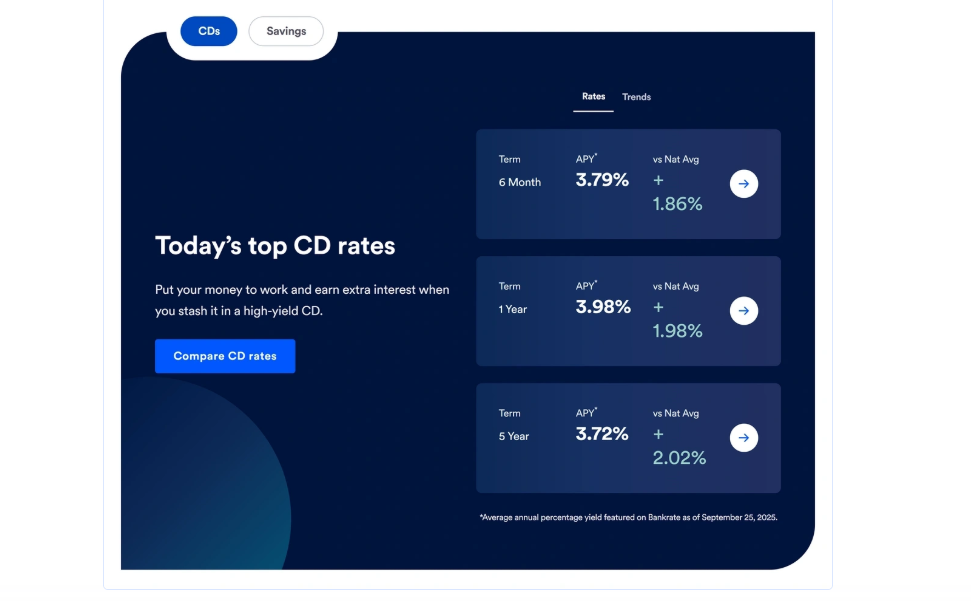
The AI Visibility Index found that this company is the number one cited finance source for Google AI mode. Why? Each post opens with a “fast-facts” box summarizing key rates, context, and disclaimers: short enough to quote, structured enough to trust. When Google’s AI Overview pulls a snippet on mortgage trends, guess which source it uses? Yep, the one that speaks its language.
How to Write AI-Friendly Answers:
- Keep sentences under 15 words.
- Answer the main question in the first 1–2 lines.
- Use lists and tables for extractability.
- Check readability with Hemingway or Grammarly.
GEO: Generative Engine Optimization
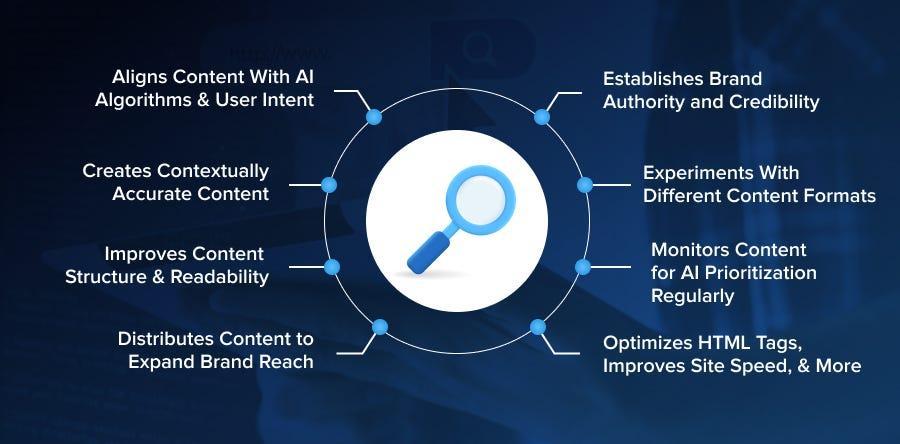
GEO is newer, murkier, and way more powerful. It’s not about ranking; it’s about training.
Generative engines like ChatGPT, Claude, and Copilot rely on a mix of public data, publisher partnerships, and crawling signals. GEO is how you make your brand part of that training diet.
Unlike traditional SEO, GEO isn’t about backlinks or meta tags. It’s about entity consistency, making sure your brand, experts, and products are defined identically across platforms. Your About page, Wikipedia entry, LinkedIn bio, and even press releases should reinforce the same facts and tone.
Mirror your brand, founder, and product names across LinkedIn, Wikipedia, press releases, and schema markup. Consistency builds recognition in LLMs.”
When OpenAI’s models or Google’s Gemini scrape for data, they’re not indexing, they’re validating. They check whether your brand’s “story” aligns across enough trusted contexts to treat you as canonical.
So, if AIO is about formatting answers, GEO is about owning the narrative that gets quoted.
AEO: Answer Engine Optimization
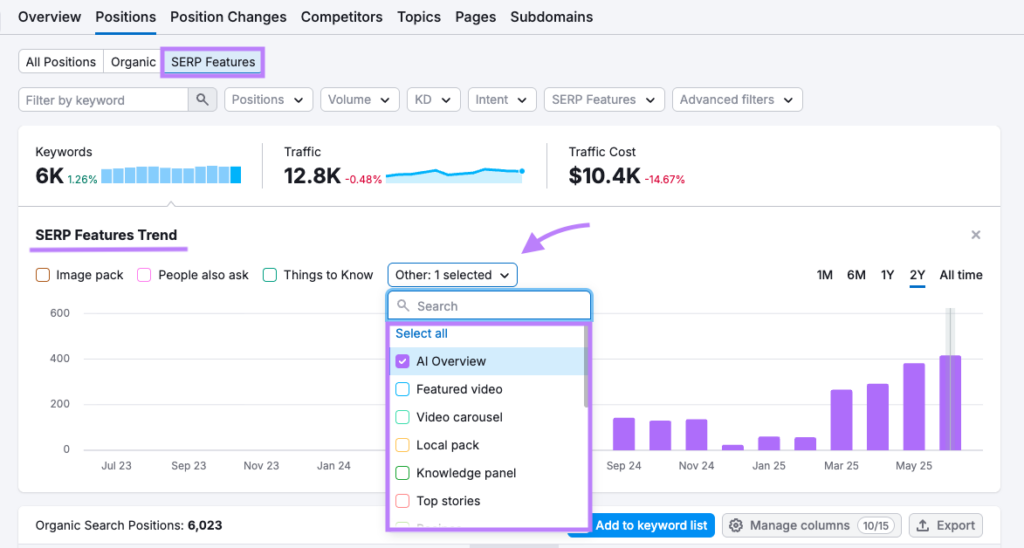
AEO is the master framework, the umbrella discipline that blends both AIO and GEO.
Think of it as SEO and AI finally holding hands. It’s the process of optimizing your content, structure, and authority signals to appear in answer engines, from Google’s AI Overviews to ChatGPT’s browsing mode, to the snippet boxes in Microsoft Copilot.
The framework looks like this:
- Identify high-intent, question-based topics.
- Create concise, verifiable, answer-ready content.
- Format it for AI readability (tables, lists, short paragraphs).
- Reinforce authority through consistent mentions and structured data.
- Monitor your AI visibility: citations, mentions, and paraphrases, using tools like Ahrefs Brand Radar or Semrush’s AI Visibility Dashboard.
- AI Overviews often reuse meta descriptions. Write emotional, human titles with natural keywords.
- Test structure and readability with Peec.ai or SurferSEO’s AI Tracker before publishing.
When you nail this loop, you’re not just optimizing for one platform. You’re teaching every major AI to trust you.
Frequency Bias: The New Ranking Factor in AI-Powered Search
Here’s something most of us learn the hard way: AI doesn’t just reward authority, it rewards repetition.
Vertical Leap’s 2024 study called this frequency bias: the more often a brand or idea appears across multiple verified sources, the more likely it is to surface in AI answers.
It’s not about who said it first; it’s about who said it most, and most consistently. That’s why off-page signals (like media mentions, influencer citations, and community discussions) now weigh heavier than ever.
If your brand’s data is echoed in five credible places: a press release, a LinkedIn article, a podcast transcript, a Reddit thread, and your own blog, the odds of an AI referencing you skyrocket.
That’s where the amplification game begins.
Building AI-Friendly Reputation Loops
Let’s get practical. To build brand trust in this ecosystem, you need to:
- Be quotable: short, evidence-based, and neutral phrasing.
- Be consistent: maintain entity-level clarity (use identical job titles, dates, and names across channels).
- Be visible where AIs hang out: platforms like Wikipedia, Quora, Reddit, Product Hunt, and credible review aggregators.
- Be amplified: through community buzz, PR, and influencer mentions.
Crowdcreate’s work in tech and Web3 has proven that coordinated influencer engagement and niche media outreach can dramatically boost brand citation frequency across both human and AI channels. The models don’t “know” Crowdcreate, but they sure know the noise it helps create.
Measuring AI Visibility: Building Your Instrumentation Stack
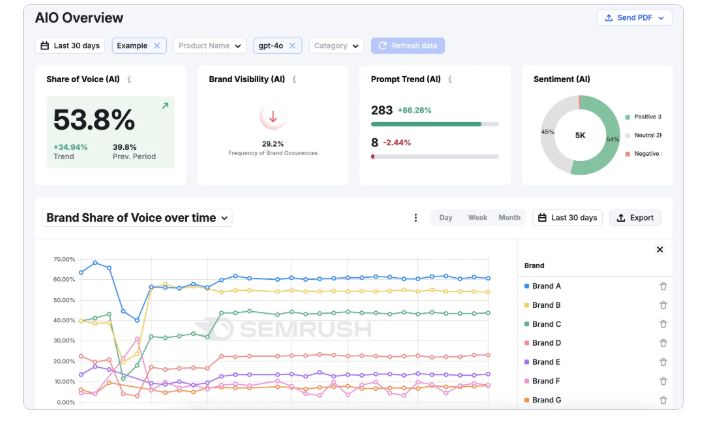
Here’s the uncomfortable truth about AI and SEO: most people flying this new plane don’t have a dashboard. They’re staring out the window, guessing whether their content is getting quoted or cannibalized.
Traditional analytics: traffic, impressions, CTR, can’t tell you if ChatGPT mentioned you, or if Gemini used your research in an AI Overview. Welcome to the new world of invisible influence, where success isn’t measured in clicks but in citations, mentions, and trust signals.
Let’s fix that.
Why You Need an AI Visibility Stack
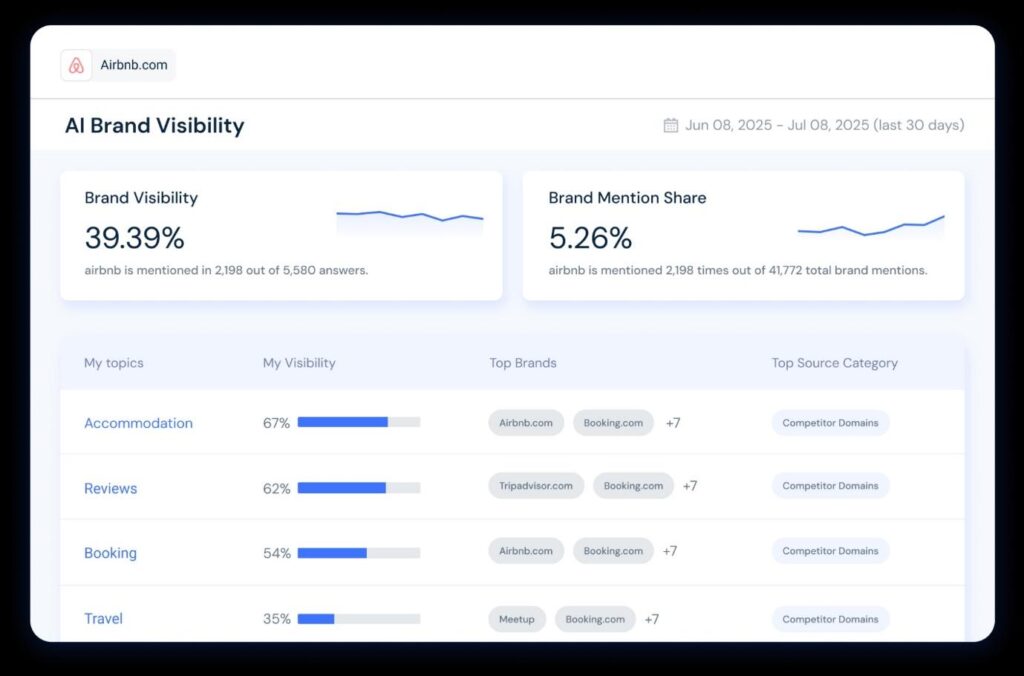
Before we talk tools, let’s define what you’re measuring. Your AI visibility has three layers:
|
Layer |
What It Measures |
Why It Matters |
|
Citations |
Direct links inside AI Overviews, summaries, or assistant responses. |
Hard proof of authority. |
|
Mentions |
Your brand or experts referenced by name (without link). |
Builds credibility + model recall. |
|
Paraphrases |
Your insights appear in AI text without direct attribution. |
Indicates influence + model learning. |
Clicks are lagging indicators. Citations and mentions are the leading ones. They show you where AI models are pulling from, and how much mindshare your brand has inside their synthetic memory.
There are a few tools around that can help with measuring right now. We’ll probably have more in the future.
Semrush AI Visibility Dashboard
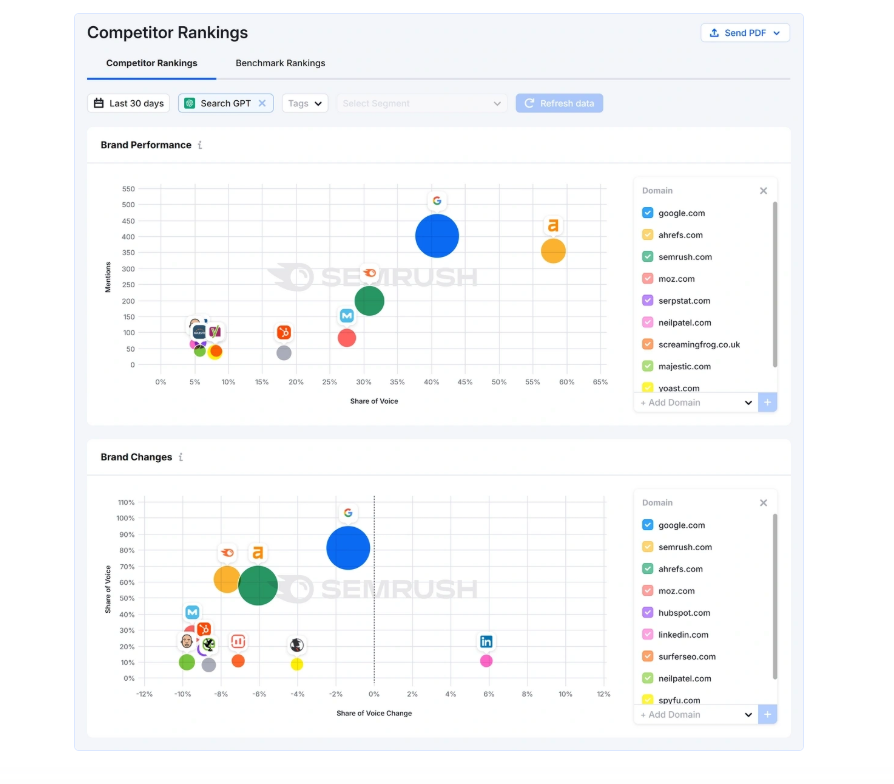
Think of this as Google Search Console for the post-search era. Semrush’s latest suite lets you:
- Track which of your URLs appear in AI Overviews (AIO).
- Compare your “AI share of voice” to competitors.
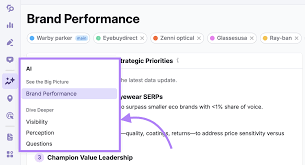
- View which questions your site helps answer.
- See “sentiment” in how AI describes your brand (neutral, positive, or “hallucinated”).
Answer the most frequently asked questions in your industry
Example: A fintech brand saw its “AI question coverage” jump 38% after publishing structured FAQs and schema-marked stats pages – data they could see inside Semrush’s “All Questions” view.
Ranking the Best AI SEO Tools
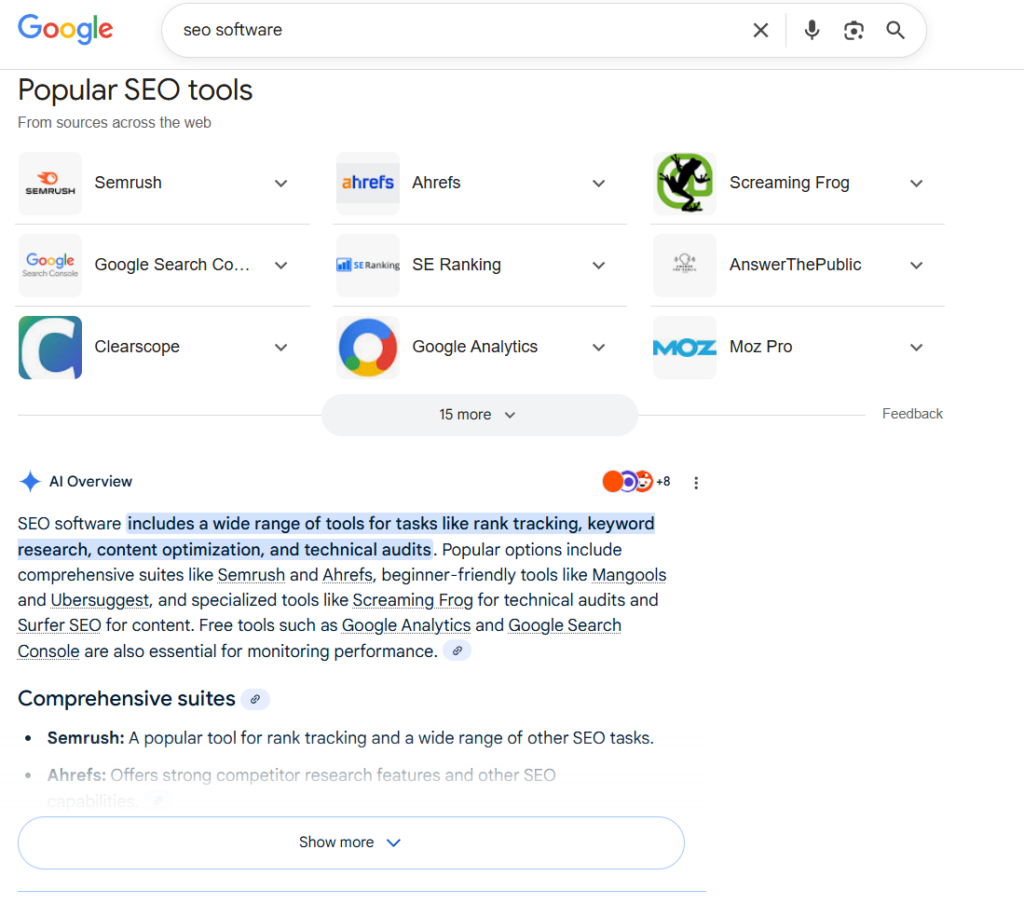
Ahrefs Brand Radar
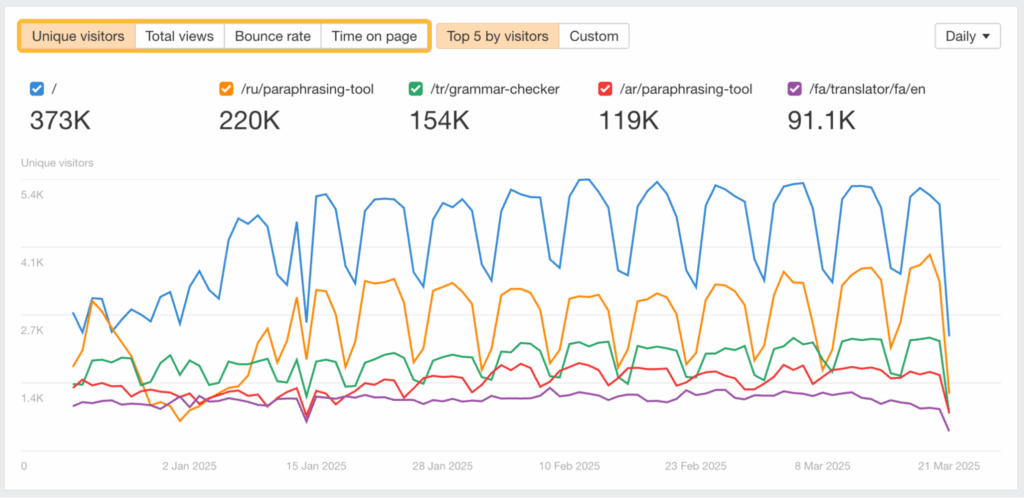
Ahrefs now monitors over 150 million AI prompts across six major AI systems (Google, ChatGPT, Perplexity, Claude, Copilot, and You.com). It tracks:
- Brand-level share of voice (SOV) in AI answers.
- Where and how your brand is mentioned (directly or indirectly).
- “Prompt clusters” – groups of questions where you appear.
Ahrefs’ May 2025 study found brand mentions had a 0.664 correlation with appearing in AI Overviews (while backlinks trailed at 0.218). So if you’ve been hoarding backlinks like Pokémon cards, it might be time to diversify into mentions.
LLMO Metrics: How to Measure Visibility in Answer Engine Optimization
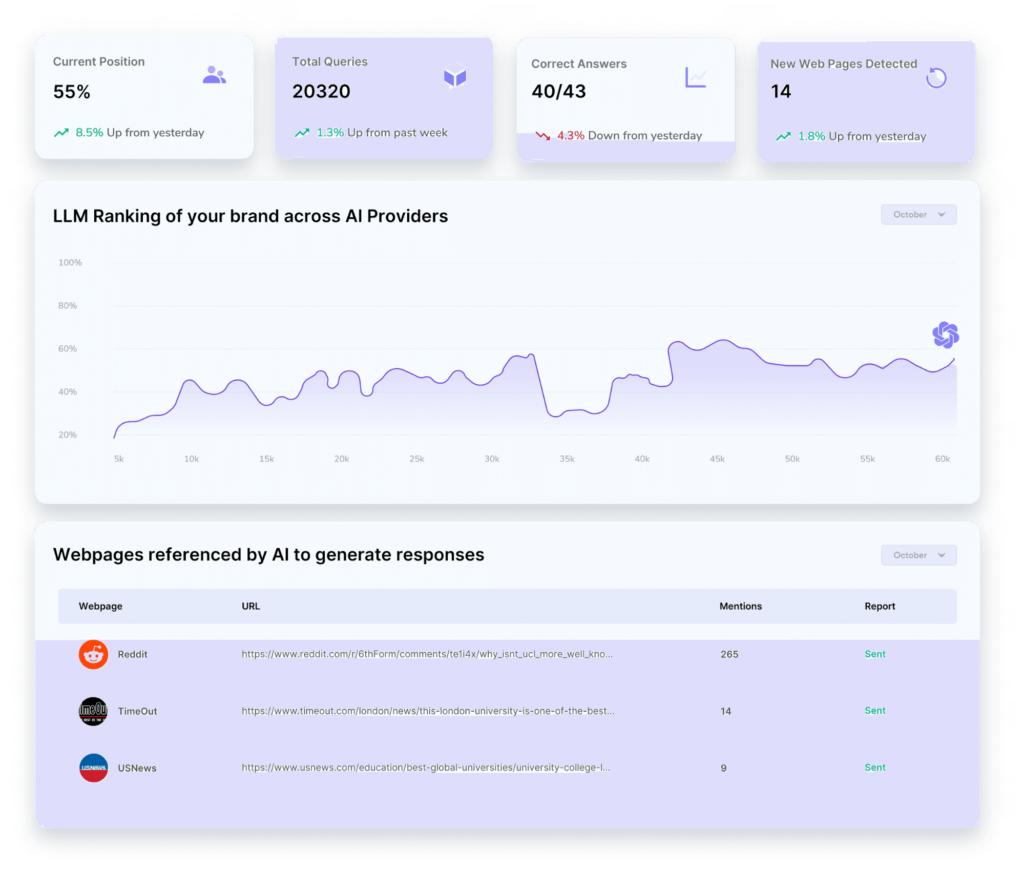
This is your experimental lab. It shows which answers your brand contributes to, how those snippets evolve, and what percentage of responses still include your domain.
- Tracks AEO performance across models.
- Flags when your content is paraphrased without citation (great for outreach or structured markup fixes).
- Lets you A/B test phrasing changes for snippet capture.
Other High-Value AI SEO Tools: Profound for Answer Engine & LLM Visibility
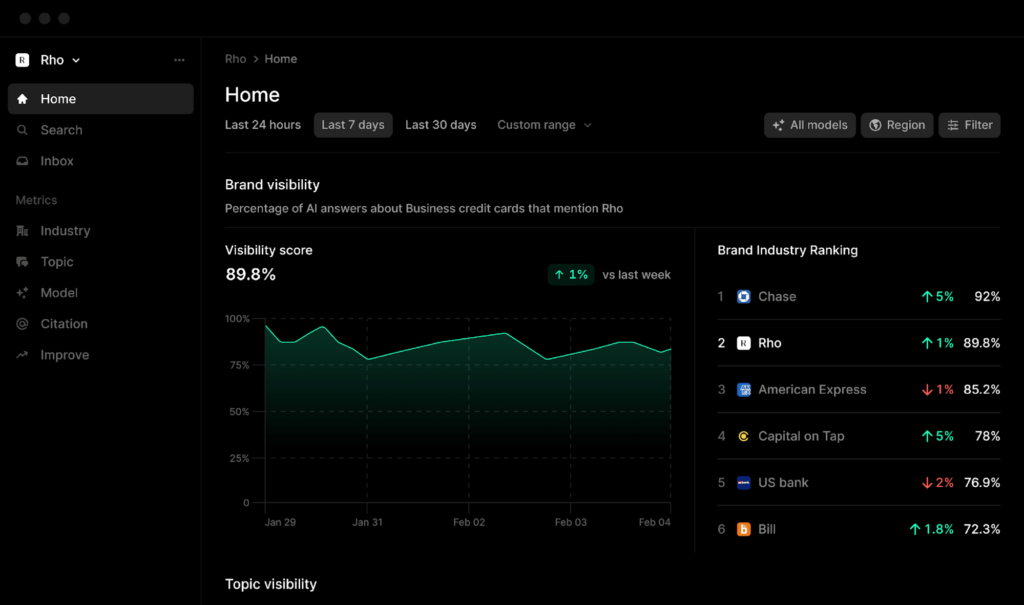
Think of Profound as the “semantic radar” for your brand. It doesn’t just track links, it tracks ideas. Profound scans across AI-generated answers, summaries, and Overviews to show where your brand is being mentioned, paraphrased, or interpreted. It’s like finding out not just if you were cited, but how you were described.
You can see your “semantic footprint” grow over time, which models recognize you, which topics you dominate, and where your message is getting distorted. It’s the closest thing to watching your reputation evolve inside the model’s memory.
Airops
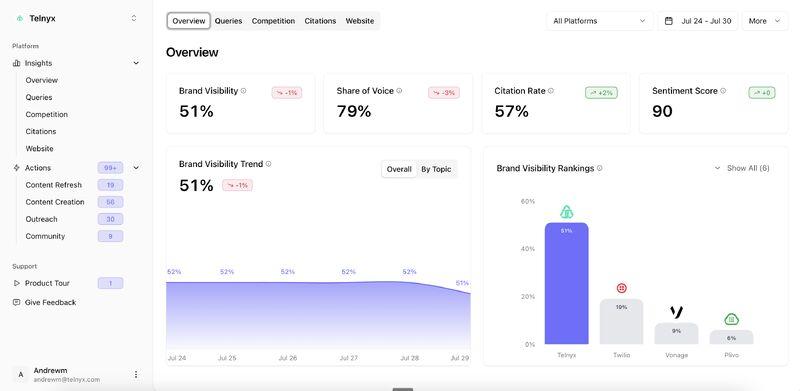
Airops is your automation layer, the reporting assistant every marketer wishes they had.
It connects to Ahrefs, Semrush, Profound, and even analytics platforms, pulling your AI visibility data into one clean dashboard. You can schedule weekly “AI Visibility Reports” that summarize where your URLs appear, what’s trending, and where citations are slipping.
It’s like having an ops analyst watching your AI footprint 24/7, then sending you the highlights before your Monday stand-up.
Peec.ai
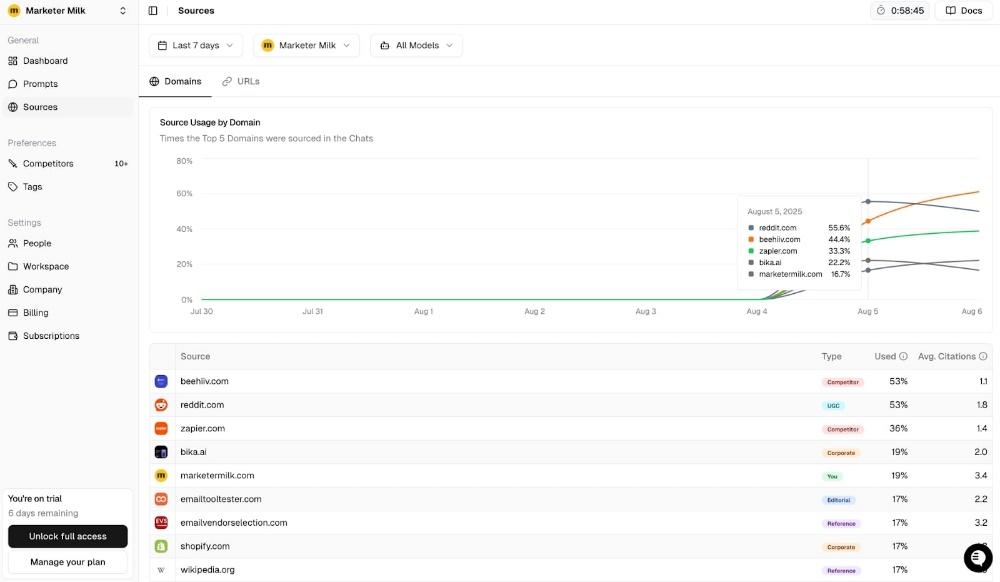
Peec.ai focuses on what actually makes content AI-readable. It scores your pages based on structure, hierarchy, and linguistic clarity, the same way LLMs evaluate them. Think of it as Hemingway for AI visibility: it flags complex phrasing, missing schema, dense paragraphs, or unclear sectioning that could block your content from being used in an AI response.
It’s especially good for teams that publish long-form content or technical explainers and want to ensure every post is “answer-ready” before it ships.
Rankability: Optimizing Content Structure for AI and Search Engine Rankings
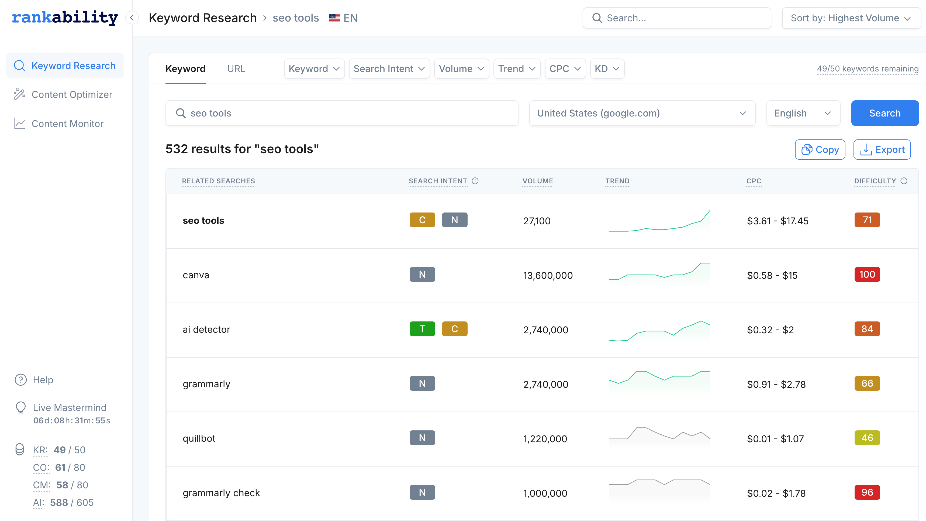
Rankability bridges the gap between traditional keyword tools and answer optimization. It clusters related keywords by intent, helping you map content for AEO (Answer Engine Optimization). The platform also scores each page for snippet readiness, meaning how likely it is to be summarized or cited in an AI Overview.
In practice, you’ll see where your content naturally aligns with AI-friendly phrasing (“best,” “how to,” “vs,” “guide”) and where to adjust for more question-driven traffic.
LLMRefs
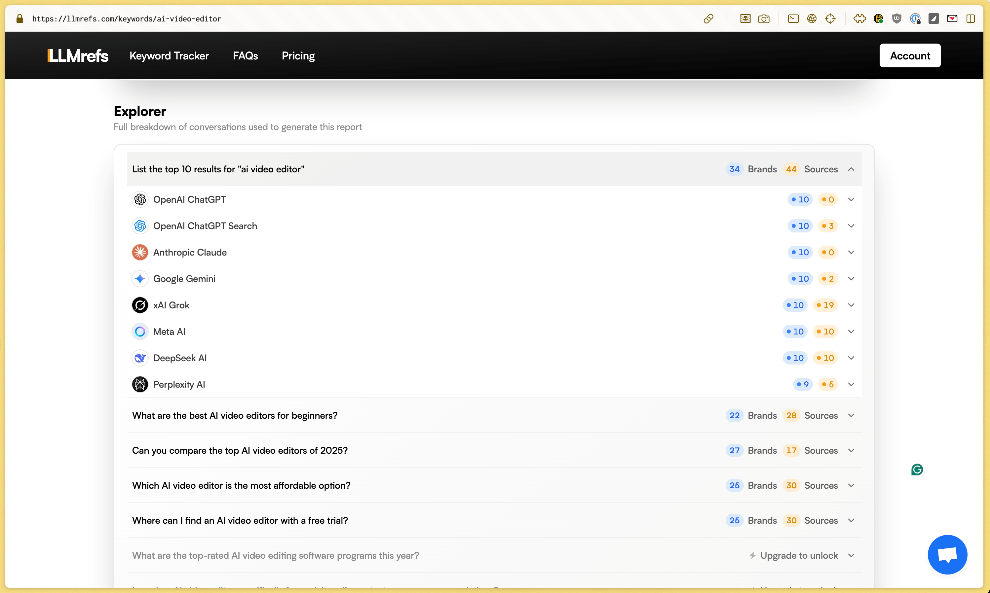
LLMRefs shows you what every SEO secretly wants to know: did the model actually cite you? It scans AI responses from major platforms and identifies URLs that appear as references or implied citations. You can filter by query type, model version, and even by content category to see where your expertise is showing up.
This tool is perfect for spotting silent wins: the times your data made it into an AI answer even when your brand wasn’t mentioned directly.
SE Ranking: AI Visibility Tracker
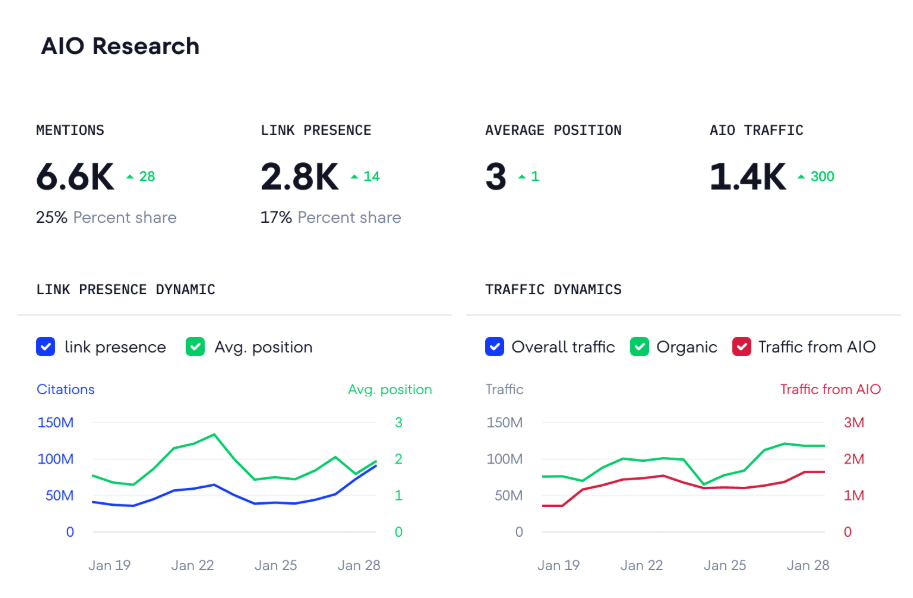
SE Ranking’s AI Visibility Tracker is the accessible workhorse in this stack. It’s affordable, easy to navigate, and gives small teams a clear view of where their pages appear in AI Overviews. The platform combines familiar SEO metrics (rank, CTR, impressions) with new ones like “AI visibility index” and “citation depth.”
If you’re not ready for an enterprise-grade system, SE Ranking lets you start tracking AI presence without the overhead.
SurferSEO: AI Tracker
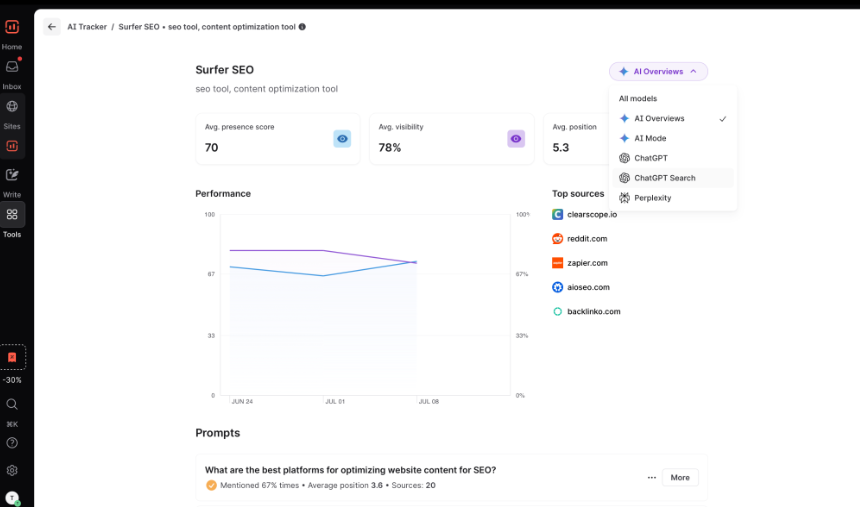
SurferSEO’s AI Tracker focuses on what happens on-page – the structure, keywords, and readability signals that determine whether AI engines can lift content into answers. It analyzes how your paragraphs are formatted, whether your key ideas are too buried, and how your schema markup compares to high-performing competitors.
For teams already using Surfer for content briefs and optimization, this module adds a new layer: ensuring every page is optimized not just for Google, but for the AI layer that follows it.
Building a Measurement Loop for AI SEO, AEO, and LLM Visibility
Once your tools are connected, your new reporting cadence looks like this:
|
Weekly |
Monthly |
Quarterly |
|
Track citation frequency, citation context, topic coverage breadth, competitor citation share. |
Compare AI vs. organic visibility |
Full content audit + model retraining insights |
|
Check hallucination errors |
Identify new prompt clusters |
Refresh structured data & author bios |
|
Log sentiment (positive/negative) |
Monitor competitor gains |
Publish zero-party insights |
Pro tip: Feed Ahrefs, Semrush, and Profound data into Airops to create one unified visibility dashboard.
Of course, automated tools can only go so far. Every few weeks, we like to manually test prompts in each assistant:
- “Who are the best agencies for AI visibility?”
- “What is AEO?”
- “How do you rank in AI search results?”
If your brand, content, or name doesn’t appear in at least one of those models, it’s time to investigate. Sometimes it’s as simple as adding structured data, updating your author profiles, or earning a new off-page mention.
When you instrument your brand properly, you stop guessing and start steering.
You’ll know:
- How your brand is being described in AI answers.
- Which of your competitors dominates key queries.
- When a model forgets you (so you can fix it fast).
- How often your data gets cited – and where.
The brands that master this new feedback loop will outpace everyone still chasing backlinks and outdated KPIs.
Zero-Party Data and E-E-A-T: The Competitive Moat AI Can’t Fake
Now, we’re getting to the really good stuff.
Let’s be blunt: AI visibility is impossible to fake long-term. You can’t keyword-stuff your way into Gemini’s good graces or out-optimize ChatGPT’s reasoning engine. You have to feed them what they crave: firsthand experience, verifiable facts, and transparent expertise.
That’s where zero-party data and real E-E-A-T (Experience, Expertise, Authoritativeness, Trustworthiness) come in. Together, they form the only real moat left in ranking in the age of AI.
What Zero-Party Data Actually Means
Zero-party data is what you collect directly from your audience: insights they volunteer, not what cookies or analytics scrape. It’s the stuff that gives your brand a voice no AI can mimic.
When you use that data to produce original insights, you stop sounding like everyone else and start sounding like the source.
Here are examples that punch above their weight:
- Customer conversations: pull quotes from support chats or interviews (with permission). AI models love human phrasing and real context.
- Internal research: summarize anonymized usage data, sales trends, or event takeaways.
- Product experiments: share the outcomes of real tests, not speculation.
- Founder notes: transcribe the actual thought process behind decisions.
Think of it this way. Google’s and Gemini’s models use E-E-A-T as a trust heuristic. They ask, “Who’s behind this claim? Can we verify it? Does this person or brand have a history of saying things that turned out to be true?”
In 2025, that extends beyond Google. OpenAI, Anthropic, and Perplexity all use signals like author profiles, domain-level sentiment, and cross-platform consistency when choosing citations.
Now, AI is now better at detecting BS than most humans. It knows when content is rewritten filler versus when it’s the real, messy output of a human who’s done the work.
That’s why every page on your site should answer three unspoken questions:
- Who are you to say this?
- Where did this information come from?
- How do we know it’s still true?
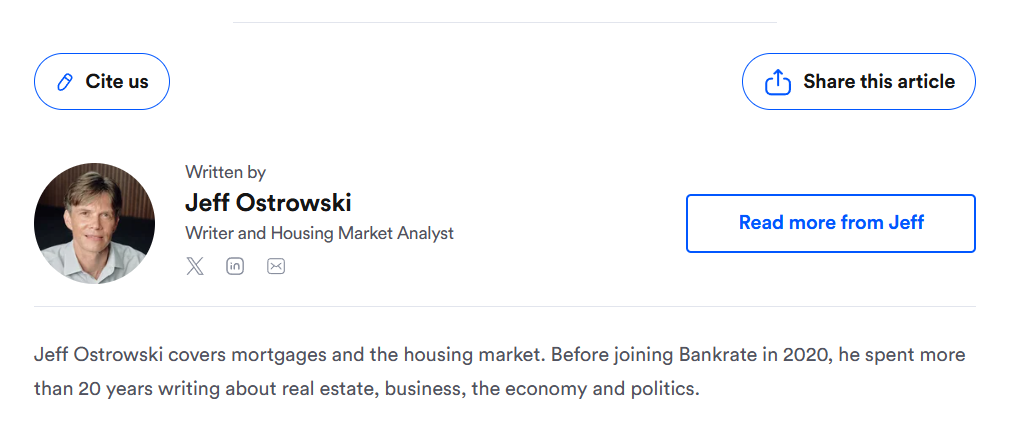
Bankrate is a perfect example. Each finance page includes:
- The author’s full credentials and review date.
- A transparent methodology.
- Source citations in plain HTML.
Link every author bio to a verified profile and update credentials regularly to maintain trust signals.
That’s why their insights repeatedly surface in AI Overviews – the structure screams reliability.
Publish one proprietary data point each quarter and mark it up with Dataset or Article schema. AIs favor verifiable, first-party numbers.
Human Skills > AI Skills (and the Maxme Lesson)
Honestly, the “human expertise” angle is so important, and so often overlooked, despite all the evidence out there that people can still do some things better than AI.
Look at Maxme’s 2025 report on leadership in the age of automation, for instance. Executives now rank human skills: critical thinking, storytelling, and empathy as the most valuable differentiators in an AI-saturated world.
That lesson applies to marketing, too. AI can rewrite, summarize, and analyze, but it can’t feel. It can’t turn an observation into an insight, or a customer frustration into a breakthrough. That’s on you.
Your content’s emotional intelligence: your ability to sound human, not polished, is now a ranking factor, both algorithmically and psychologically.
How to Turn Real Experience Into Verifiable E-E-A-T Signals
If you’ve ever said, “We learned a lot from this,” that’s a blog post waiting to happen. If you’ve ever published an internal report, that’s data waiting to be quoted.
In the SEO and AI era, the brands winning citations aren’t the ones producing the most words; they’re the ones publishing proof of learning.
- Practical ways to surface that proof:
- Post quarterly insight roundups (“What We Learned About Customer Behavior in Q1”).
- Embed anonymized quotes from interviews.
- Publish “behind-the-numbers” notes under each chart explaining methodology.
- Include downloadable CSVs (models reward transparency).
When you distribute those insights through your own channels, media, and community networks, that’s when AI models start picking them up as authoritative data points.
In one campaign we watched, a B2B tech brand’s internal benchmark report was repurposed into:
- A founder-narrated YouTube explainer.
- A LinkedIn carousel shared by 30 micro-influencers.
- Three guest articles syndicated through niche publications.
Within six weeks, Gemini began citing the brand’s stats in its own product-comparison answers. That’s visibility engineering.
Checklist: How to Build an E-E-A-T and Data Moat AI Can’t Copy
- Collect your own data. Ask customers directly. Run experiments. Publish real results.
- Show your face. Add author bios, credentials, and even mistakes – authenticity is authority.
- Keep everything public. If you hide insights behind forms, AIs can’t see them.
- Be quotable. Write short, verifiable sentences. Include stats with sources.
- Distribute smart. Use social, community channels, and partners like Crowdcreate to ensure your insights are echoed beyond your domain.
- Refresh often. Update timestamps, add new findings, and publicly archive outdated data.
Zero-party data and authentic expertise are your twin engines. They fuel your credibility with AIs and your connection with humans.
Because in this new world of AI and SEO, every insight is either an input or an echo, and the brands generating their own inputs are the ones the machines keep repeating.
Template: Creating an E-E-A-T Ultimate Guide for AI Search Visibility
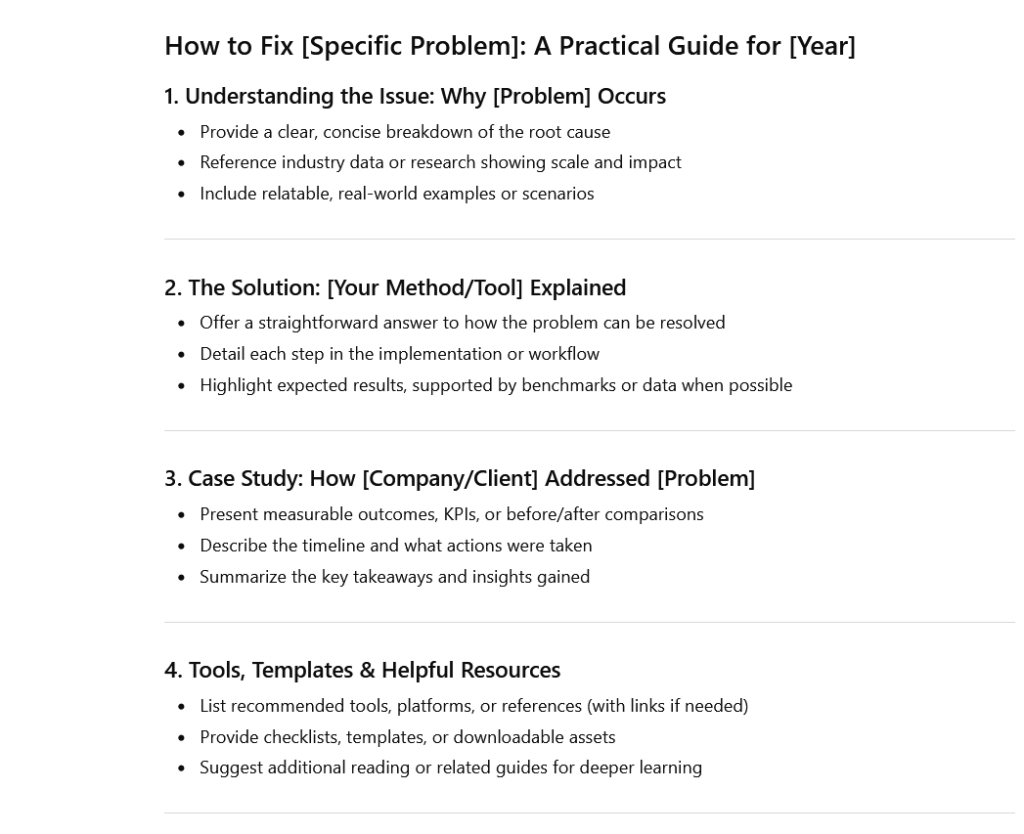
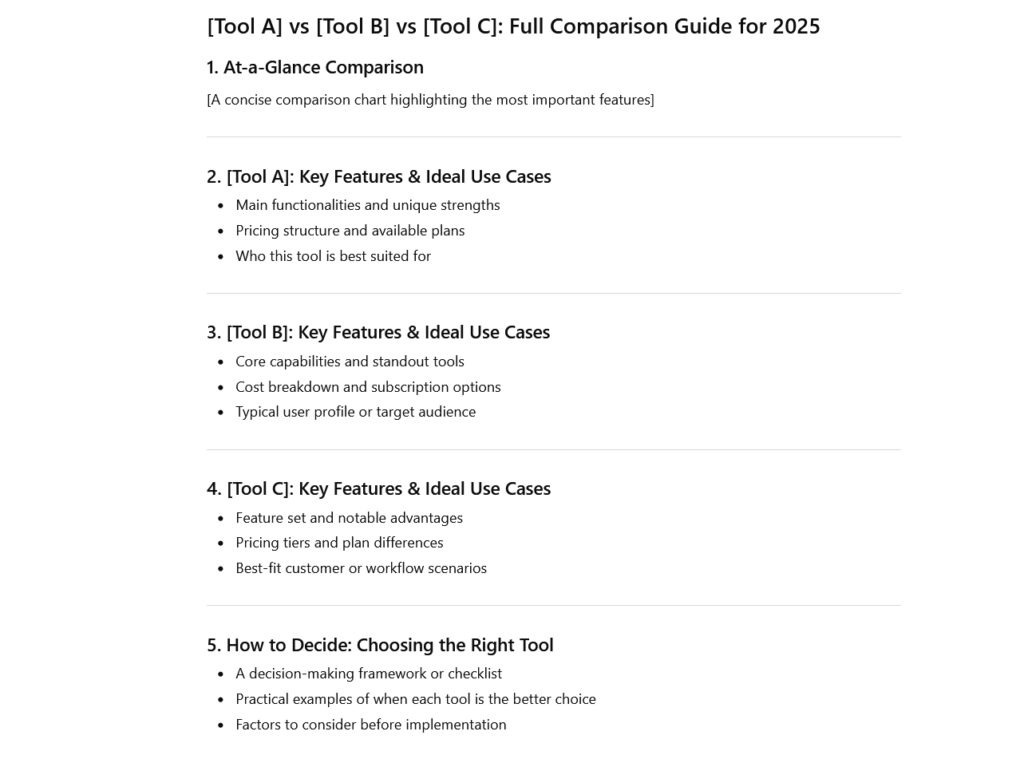
Here are just a few templates you can use to create guides that actually show your experience.
They’re not complicated, but you do need to build on them with your own data.
Creating an E-E-A-T Ultimate Guide for AI Search Visibility
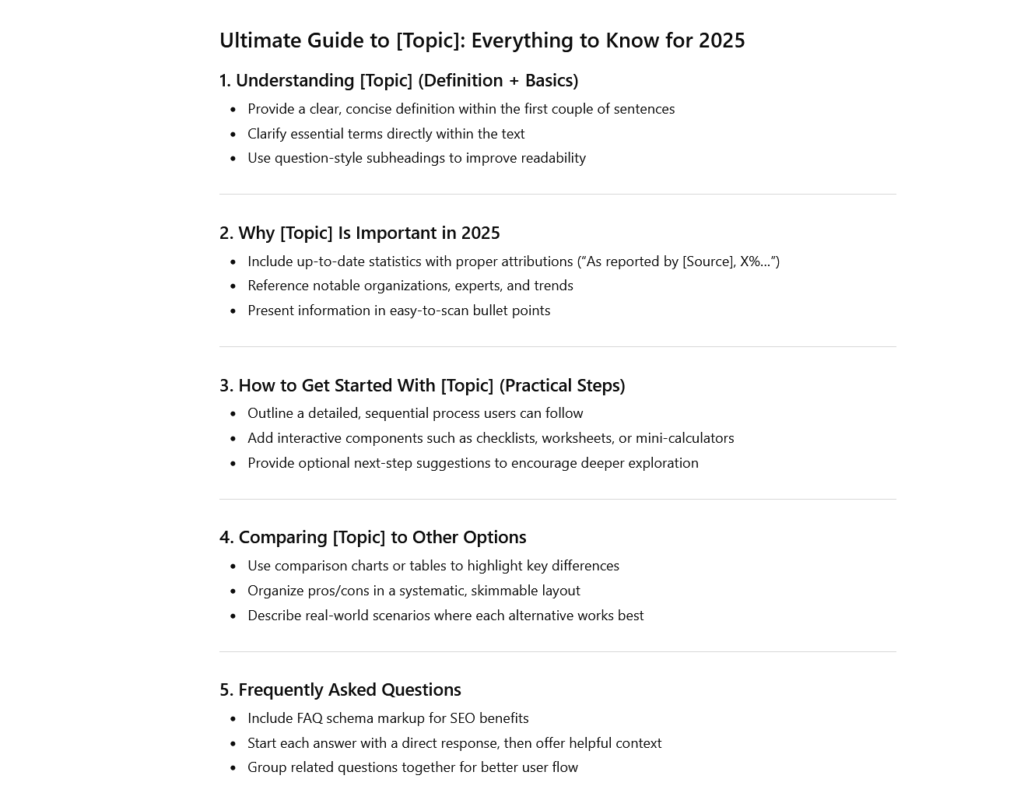
The Problem-Solving Template: Turning User Problems Into AI-Trusted Content
The Expert Comparison Template for Answer Engine and AI Search Visibility
Mastering AEO: The Field Manual
At this point, you understand the theory: AI visibility is the new frontier, zero-party data is your secret weapon, and trust beats traffic. Now it’s time to roll up our sleeves. This section is the tactical blueprint on how to engineer visibility inside the answers themselves.
Discover High-Intent Questions
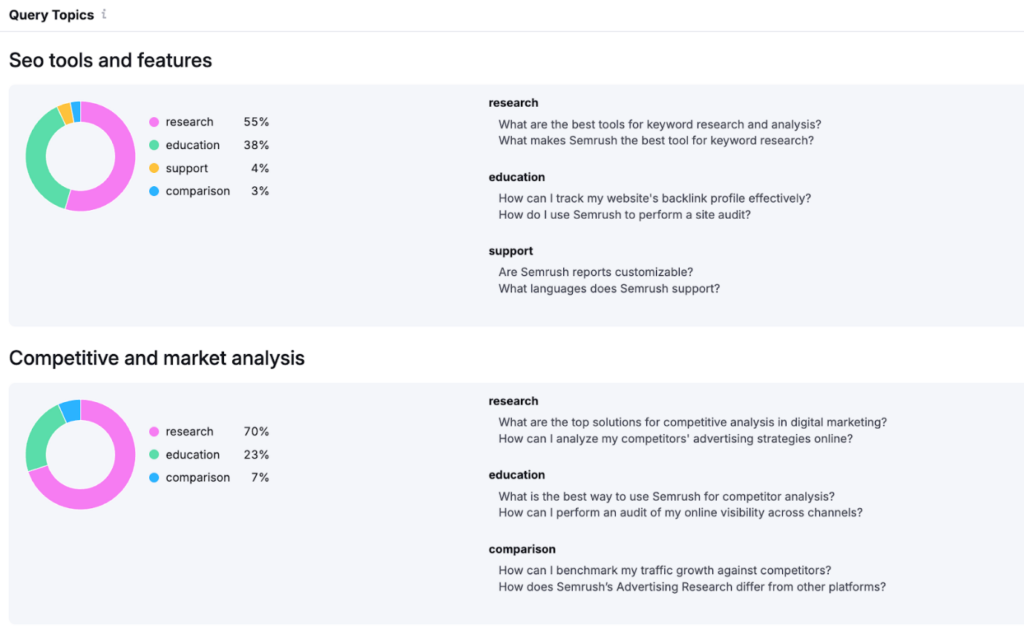
Everything starts here: identifying the questions that deserve your answers.
Forget traditional keyword research, that’s a 2019 problem. We’re now mining intent clusters: how users actually phrase their curiosity when they talk to AI.
As an AI SEO marketing agency, we guide brands to do this every month:
- Semrush AI Visibility Reports: Look under “Emerging AI Questions.” These show which queries are generating AI Overviews in your niche – often before you even see them in Google Trends.
- Ahrefs Brand Radar Prompt Clusters: This reveals what kind of questions your brand is already surfacing for. It’s not perfect, but it’s directional gold.
- Reddit, Quora & Product Hunt: Use these to validate real phrasing and emotional tone – “What’s the best way to…” beats “How to…” every time.
- Customer transcripts: The most overlooked data source. The exact questions your customers ask in sales calls? Those are your next articles.
The goal is to spot AI-ready intent – questions with depth, ambiguity, or consequence. If a question could be answered with a quick bullet list, the AI doesn’t need you. If it demands insight or judgment, that’s your stage.
7 Prompt Patterns AI’s Love
- What is [concept] and how does it work?
- Best [solution] for [use case]
- How to choose [solution type]
- [Tool] vs [Tool]
- [Industry] + [process] + best practices
- What does [term] mean in [context]?
- [Year] guide to [topic]
Don’t just chase questions, predict them. Use tools like AlsoAsked, AnswerThePublic, and support-ticket mining to anticipate emerging queries. If you answer tomorrow’s questions today, you train AIs to treat your site as a first-mover source.
Answer-Focused Content: Feeding AI and Modern Search Engines
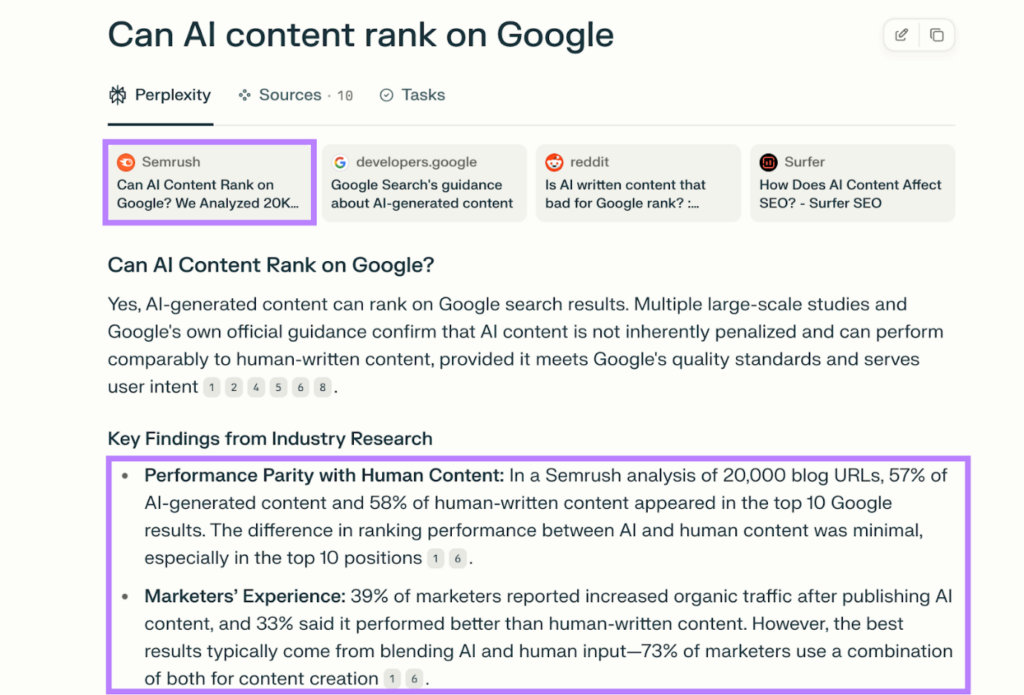
Microsoft’s 2025 AEO guidance clearly states that answers combining precision, brevity, and structure are most likely to be summarized or cited by AI systems. The takeaway is simple: content should be written to be quoted and reused, not stretched or padded just to rank.
AI-ready pages follow a specific structure that makes information easy to extract. They begin with a short hook paragraph that defines the problem in plain language, followed by a direct answer under 100 words that delivers the main takeaway. Expanded reasoning should then be presented using three to five bullet points or a short table. Visual support should be provided through charts, tables, or stat summaries that are readable by machines. Sources should be cited inline rather than in footnotes, and charts or tables should be labeled using HTML or descriptive alt text instead of image-based visuals.
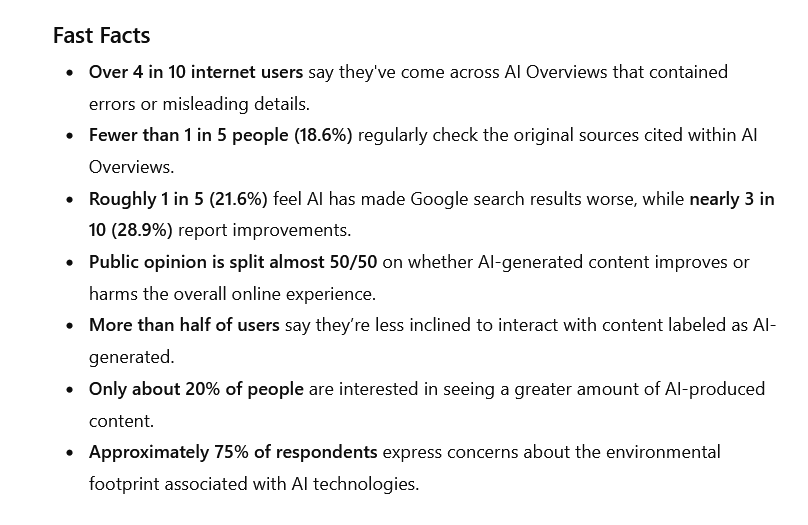
Bankrate’s mortgage explainer is a strong example of this approach. It opens with a fast facts summary and a one-line TL;DR, which is exactly the type of snippet structure that Gemini and Copilot pull into AI Overviews.
The Simple AEO Checklist: Steps to Optimize Content for Answer Engines
Effective answer engine optimization starts with a question-focused and engaging headline, followed by a direct answer to the key question within the first one or two sentences. High-performing content includes FAQ schema markup, inline definitions for important terms, structured subheadings using H2 and H3 tags, and clear bullet points.
Additional optimization elements include statistics with cited sources, numbered lists, summary boxes or sidebars, interactive features such as videos, checklists, or calculators, and clear next-step prompts with related ideas that guide users forward.
Content Formatting for Generative Engines: How to Make AI Read and Rank Your Work
Formatting has become a core part of optimization. Exploding Topics relies on crisp headlines, fast facts, and minimal JavaScript to maintain machine readability. Bankrate strengthens performance by integrating schema markup and microdata, making content easier for AI systems to process.
Xponent21’s 2025 case study highlights the impact of AI-friendly formatting. After redesigning more than 60 articles using semantic HTML, introductions under 100 words, and live data blocks, their AI search visibility increased by 4,162% in less than a year.
Best practices that consistently work include using table tags instead of screenshots of charts, keeping paragraphs under 70 words, and writing answers that can stand alone when excerpted. Adding visible update timestamps such as “Updated October 2025” signals freshness, while placing a short TL;DR box near the top with one statistic and one action point improves extractability.
AI visibility also benefits from content variety. Converting major insights into multiple formats such as long-form guides, visual summaries, or audio and video transcripts creates multiple entry points for AI systems. Each format increases the chances of the content being recognized, remembered, and reused.
Formatting now is optimization.
- Exploding Topics uses crisp, structured headlines, fast facts, and minimal JavaScript.
- Bankrate integrates schema markup and microdata to make pages machine-readable.
- Xponent21’s 2025 case study is the holy grail: after redesigning 60+ articles into AI-friendly layouts (using semantic HTML, sub-100-word intros, and live data blocks), their AI search visibility shot up 4,162% in under a year.
Tips that consistently work:
- Use <table> tags, not screenshots of charts.
- Keep paragraphs under 70 words.
- Write answers that can stand alone if excerpted.
- Add timestamps (“Updated October 2025”) – AIs prefer freshness.
- Add a short TL;DR box near the top with one stat and one action point, then date it for freshness.
Remember, AI visibility doesn’t just come from text: it comes from variety. Convert every major insight into at least two formats: a long-form guide, a visual summary, or an audio/video transcript. Multi-format content creates multiple training entry points for the same idea. Each format increases your odds of being remembered.
Technical Optimization for AI Discovery
If you’re a technical SEO purist, this part will feel like home.
-
robots.txt – Make sure you’re not accidentally blocking LLM crawlers (OpenAI, Anthropic, Perplexity)
-
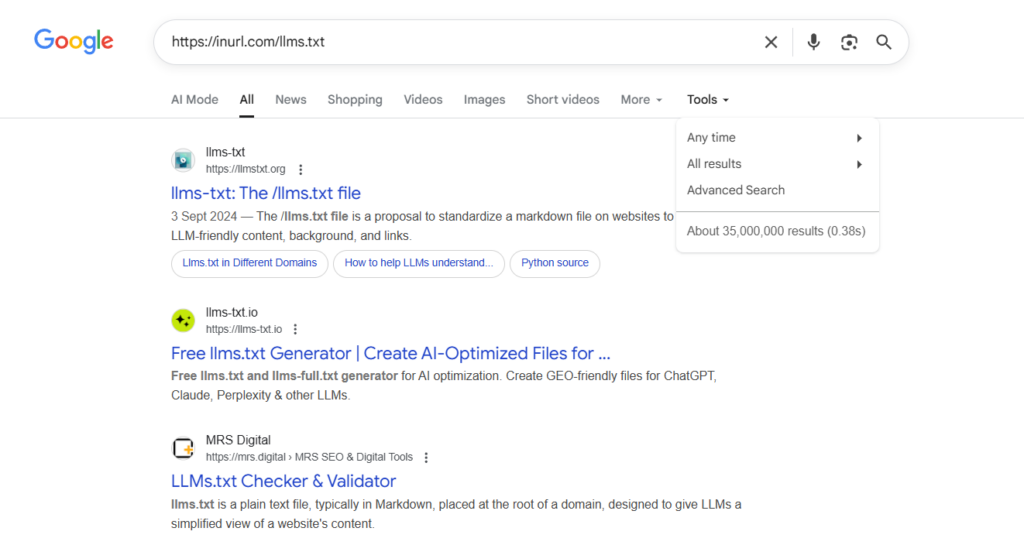
llms.txt – The new protocol file. Explicitly grant or deny model access. Think of it as your AI-friendly sitemap
-
Reduce JavaScript rendering – Gemini still struggles with heavy scripts. Keep your main content HTML-visible
-
Structured data – Schema markup (FAQ, HowTo, Product) remains essential. SEJ’s 2025 analysis found schema-included pages were 47% more likely to appear in Overviews
-
Minimize duplication – Models flag duplicate text across pages as noise
Pro tip: Add “AI-friendly metadata” — short, clear meta descriptions that function like pull quotes. Some AI engines actually use these for quick summaries.
To make content quoteable by LLMs, lead with the answer. Use phrases like “According to…” or “Research shows…” to give your statements built-in attribution. Include precise stats and explain why they matter. Always link your source. AIs quote clarity, not cleverness.
Establish Brand Trust Beyond E-E-A-T
You can’t trick an LLM into trusting you, but you can train it to.
-
Publish original research under your own name
-
Maintain a visible “Last Updated” cadence
-
Add methodology pages for any data you share
-
Cross-link your experts’ bios across the site and LinkedIn (entity consistency)
In SEMrush’s 2025 study, brands with transparent author attribution were 2.7× more likely to be cited in AI Overviews than anonymous corporate blogs.
Citation Ready Language:
- Lead with the answer.
- Use phrases like ‘According to…’ or ‘Research shows…’ to create quotable context.
- Include verifiable numbers and link sources.
- Audit structured data quarterly (FAQ, Article, Organization, Review, Dataset).
Off-Page Visibility & Share of Voice Expansion
This is the new form of link building, but the goal has shifted. Instead of chasing backlinks, the focus is on creating echoes—your insights repeated naturally across the web. AI models favor brands that show up often and consistently within trusted, high-credibility spaces. Working with an AI marketing agency can help brands identify these opportunities and maximize their presence in relevant networks.
AI systems prioritize sources that are frequently referenced across platforms like Reddit, Quora, LinkedIn, niche industry blogs, media outlets, and citation-style resources similar to Wikipedia. Visibility across these networks signals authority, relevance, and trustworthiness, even without a traditional backlink.
In practice, this looks like an expert quote appearing inside a relevant Reddit discussion, a stat from your original report being cited in a niche newsletter, or a guest article summarizing your insights that gets republished by an aggregator. It also includes organic community conversations where people reference your data without prompting.
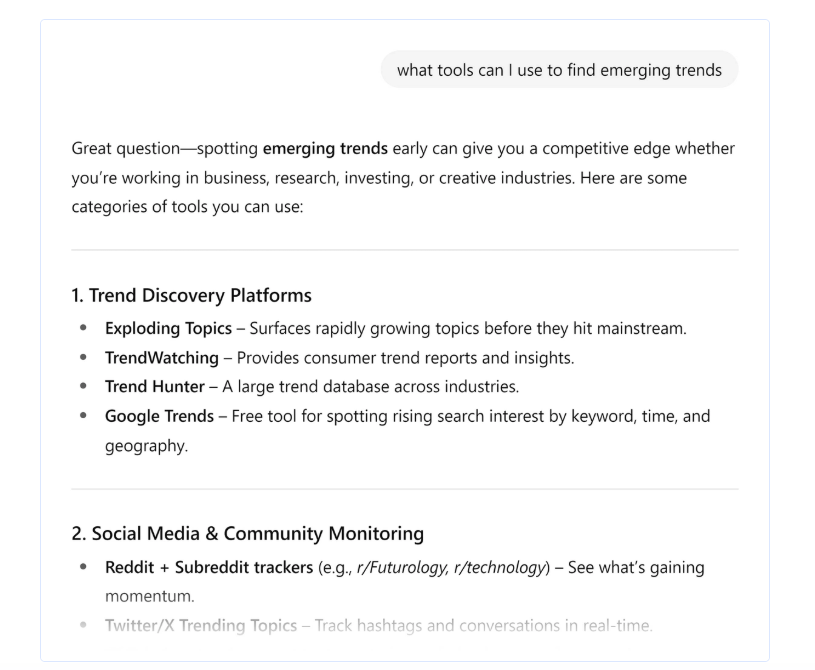
Reddit and Quora, in particular, have become high-value training data for AI models. Answering high-traffic questions with a single strong data point, one supporting visual, and one credible source significantly increases the chances of your content being learned, recalled, and reused by AI systems.
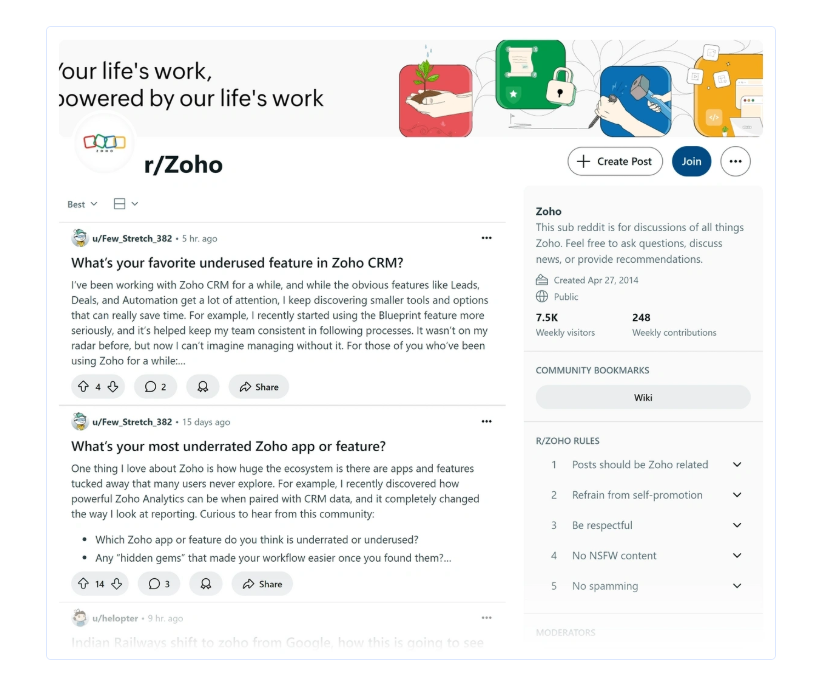
Track unlinked mentions with Profound or ZipTie.ai to see where your ideas appear.
Each mention amplifies the “frequency bias” – the factor Search Engine Land and Vertical Leap identified as the biggest predictor of AI visibility.
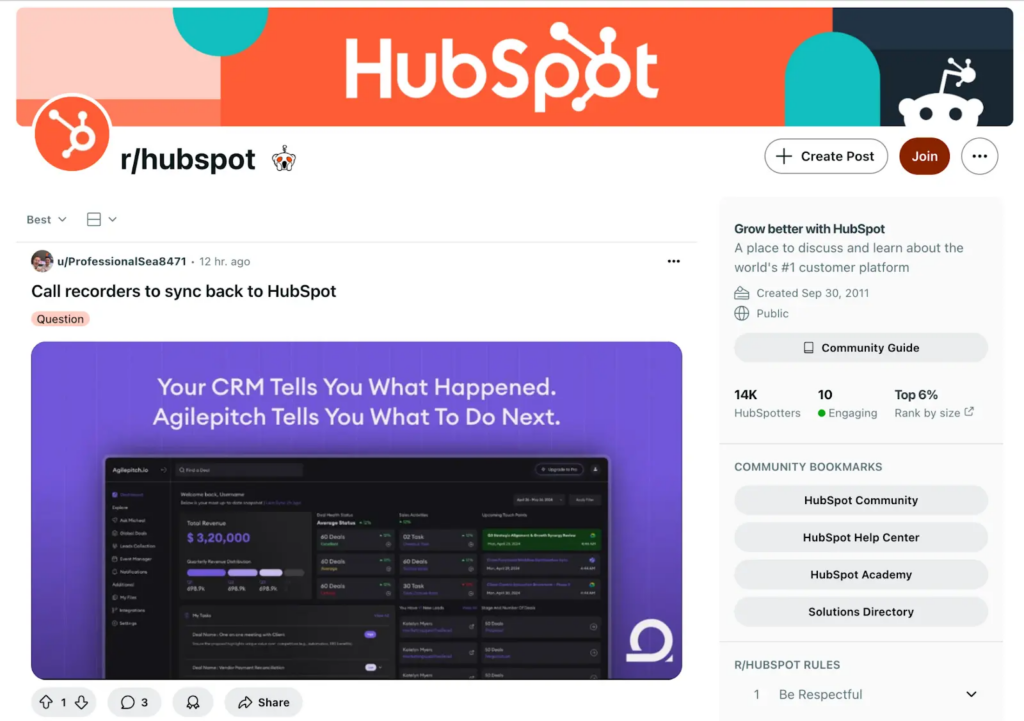
Remember, actually responding on Reddit works too, if you provide value:
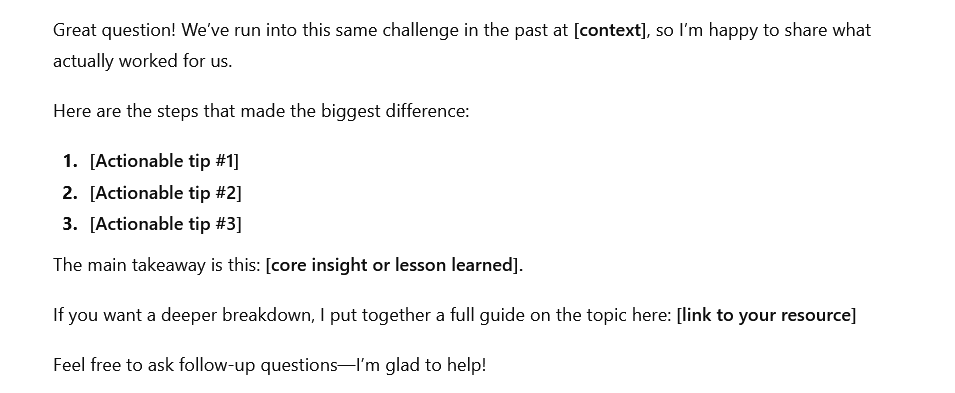
When you provide valuable answers on these channels, you create “citation-worthy” content – the sort of stuff that AI’s love to reference.
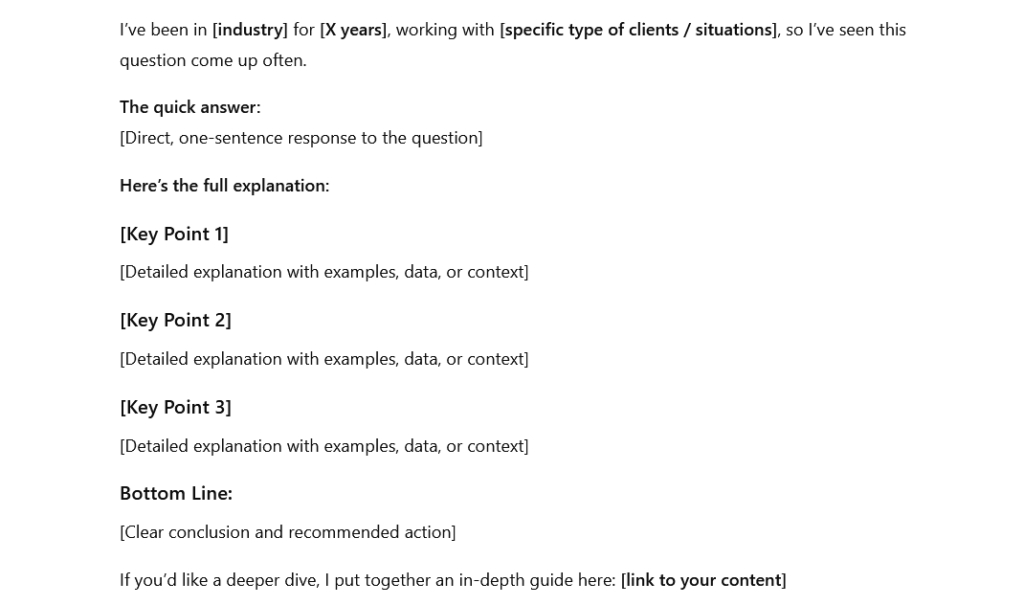
Cross-Platform Syndication Loops: Amplifying AI SEO and Answer Engine Visibility
You can’t build AI visibility in one place anymore. You have to create repetition across ecosystems. Each platform: Reddit, Quora, LinkedIn, X, represents a different surface area for model memory. Post the core insight as a Reddit summary, answer a related Quora question, share the data visualization on LinkedIn, and quote the headline stat on X.
Four mentions, one source, each feeding the model’s recall loop.
Every republished insight multiplies your visibility signals. Models don’t see channels, they see frequency, clarity, and consistency.
AIs index reputation the way humans do: through consensus. If your name keeps showing up in credible communities, you gain what we call trust velocity. It’s not about going viral, it’s about being seen as inevitable. Higher community authority = higher citation likelihood.
Quick Tip:
You can use automation to extend reach, but authenticity keeps you safe. Light-touch automation: like scheduling AI-assisted Reddit replies or Quora summaries with human review, can sustain activity without turning robotic. The rule: if it doesn’t sound like you, don’t post it.
Pricing & Documentation Transparency
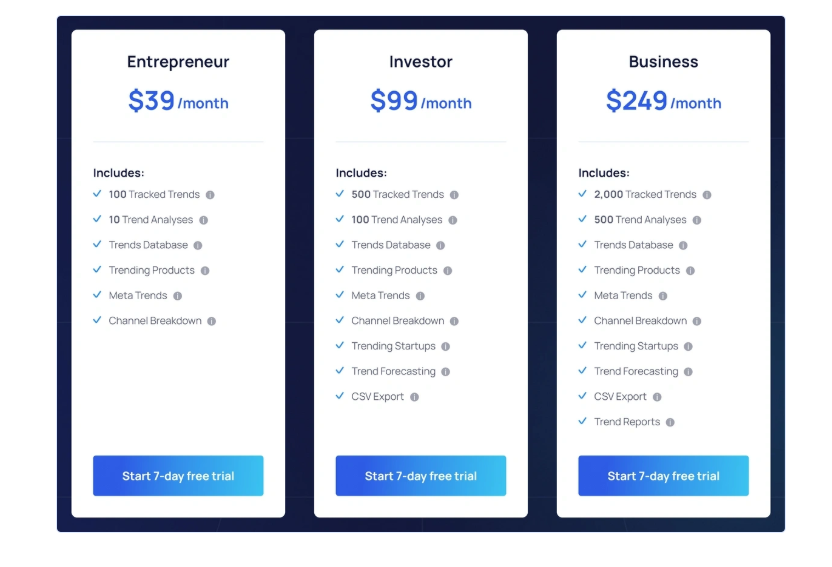
One of the most underrated AEO boosters is clarity. AI models favor brands that publish transparent, easy-to-access information such as clear pricing, refund policies, and technical documentation. When details are openly available, it signals trust and reduces uncertainty for both users and algorithms.
Platforms like Exploding Topics and SEMrush point out that AI Overviews now extract pricing snippets for B2B products directly from pages that display prices clearly in clean HTML. When pricing or documentation is hidden behind forms or gated flows, AI systems cannot access or trust it, making those pages effectively invisible. Opening up this information improves discoverability and often converts better for real users as well.
Monitoring and Refreshing Your AEO Footprint
Answer Engine Optimization is not a one-time task—it functions as a living system. Every quarter, brands should revisit their AI footprint to understand where visibility has been lost or gained across answer engines.
This process typically includes running Semrush and Ahrefs reports to identify lost citations, using LLMO metrics to see which answers no longer reference your brand, refreshing outdated data or statistics, and resyndicating new insights through social channels or trusted partners like Crowdcreate. Zapier’s content team is a strong example of this approach. They treat each article as a product with an ongoing maintenance schedule, which is why their visibility compounds over time while competitors gradually fade.
Why Core SEO Practices Still Power AI Search Visibility
AI and SEO isn’t an either/or game. It’s a yes/and.
You don’t get to ignore the fundamentals just because AI is rewriting the rules. Structure, crawlability, and intent are still the bones of the web. Without them, AI engines don’t even know you exist. In other words, before you can rank in AI search results, you still have to deserve to rank anywhere.
The Backbone Still Works
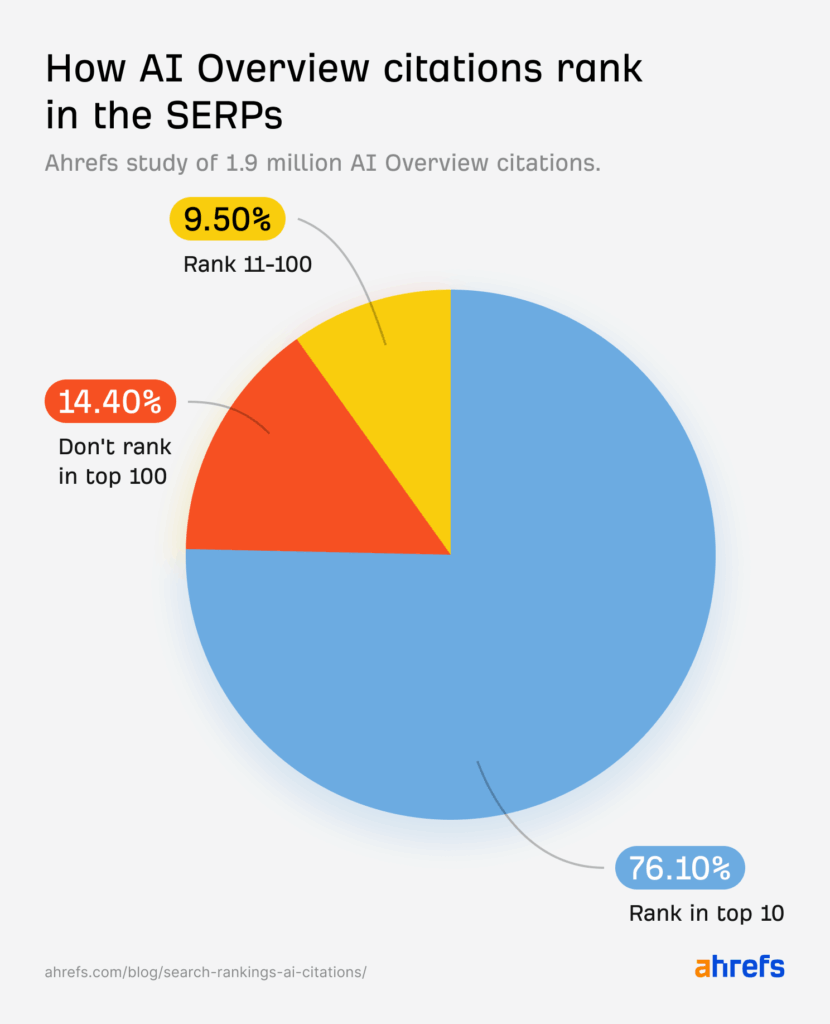
I’ve run tests on dozens of client sites since Google rolled out AI Overviews, and the same pattern repeats: the pages that perform best in Overviews are also the ones that already dominate classic SEO metrics.
Gemini and ChatGPT aren’t replacing SEO; they’re filtering it.
So yes, your site speed still matters. Schema still matters. Headings, meta titles, internal linking, and canonical tags — they all matter. AI might not “see” design, but it does see structure, consistency, and credibility.
Don’t forget content depth. Luxid’s 2025 analysis found that articles with more than 1,200 words and at least one original chart were 2.3× more likely to appear in Gemini summaries than short-form posts. Long-form still wins — as long as it’s answer-first and structured for clarity.
The Keyword Strategy
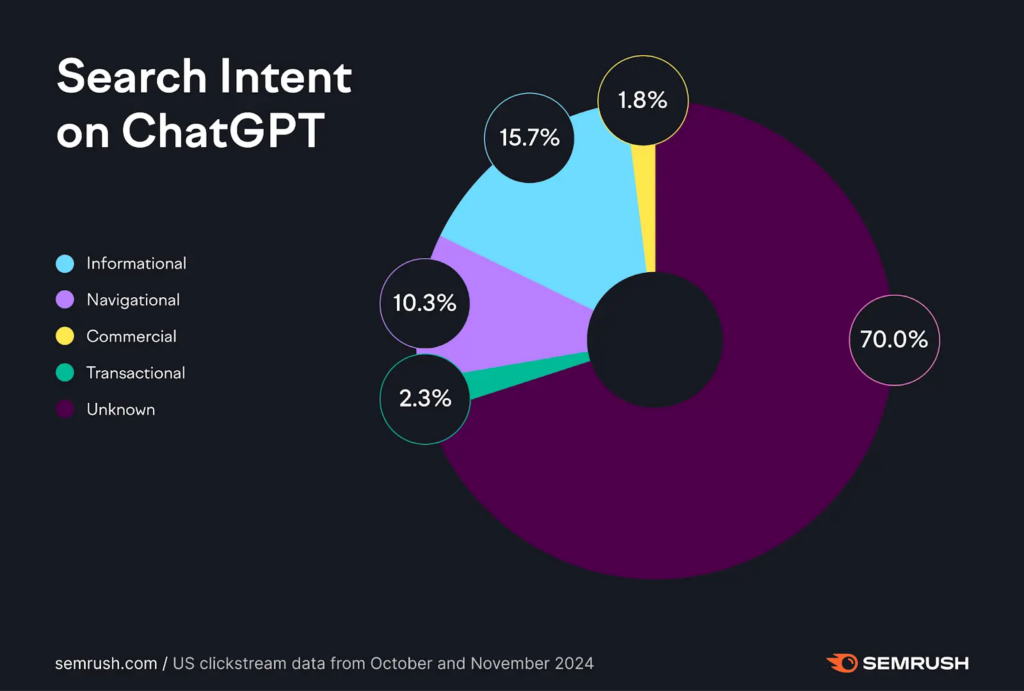
Even in an AI-first world, keyword strategy isn’t dead. It’s evolved. Think intent-first, not keyword-first. Use long-tail phrases that mirror what people actually ask: the questions, comparisons, and problem-solving searches that AI engines love.
Group related ideas naturally under H2s and H3s, and keep paragraphs short. Structure still signals meaning, and meaning is what AIs read.
Quick structure check:
- Does each section answer one clear question?
- Do H2s summarize the main idea in plain language?
- Are keywords grouped by intent, not repeated for density?
Clean hierarchy, summaries, and visuals keep your content visible to both humans and machines. Readability isn’t decoration; it’s visibility.
Entity Linking and Information Architecture
Another major revolution in SEO and AI is entity linking: connecting people, brands, and ideas into a cohesive web of meaning. Google, Gemini, and ChatGPT all build their knowledge graphs from context.
If your authors don’t link back to verified profiles, if your brand isn’t tied to known entities, if your services aren’t described in consistent language across pages, you’re making it harder for AIs to remember you.
Jason Pittock calls this semantic scaffolding: the internal architecture that lets models identify what you stand for. A quick internal linking checklist:
- Every major service or topic should have a canonical “pillar” page.
- Every author should have a public, schema-tagged bio.
- Cross-link your methodologies, glossaries, and FAQs.
- Keep URLs clean, descriptive, and permanent.
These are old-school moves, but they’re the reason new-school algorithms can trust you.
Another great tip? The best AI-visible brands think in clusters, not campaigns. Choose one topic, then own every question around it. Example: one hub (“The Complete Guide to SaaS Metrics”) supported by five spoke pages that unpack definitions, KPIs, use cases, and frameworks. LLMs reward completeness: become the Wikipedia of your niche.
Just remember, entity clarity means nothing without authority. Pair structure with credentials: expert authors, peer recognition, and a visible publication trail. These layers form your Authority Stack – the composite trust signal that determines whether AIs treat you as a source or a footnote.
An Always-On Optimization Approach for AI Search Visibility
You don’t “optimize” for AI once and ride off into the SERP sunset. The AI landscape shifts too fast — models retrain monthly, new answer engines launch weekly, and visibility decays silently if you stop feeding the system.
What separates brands that stay visible from those that vanish is cadence: how consistently they refresh, audit, and adapt.
I call it the AI Visibility Operating Rhythm, and it’s how we keep clients front-and-center in an algorithmic world that forgets fast.
Weekly: Monitor and Listen
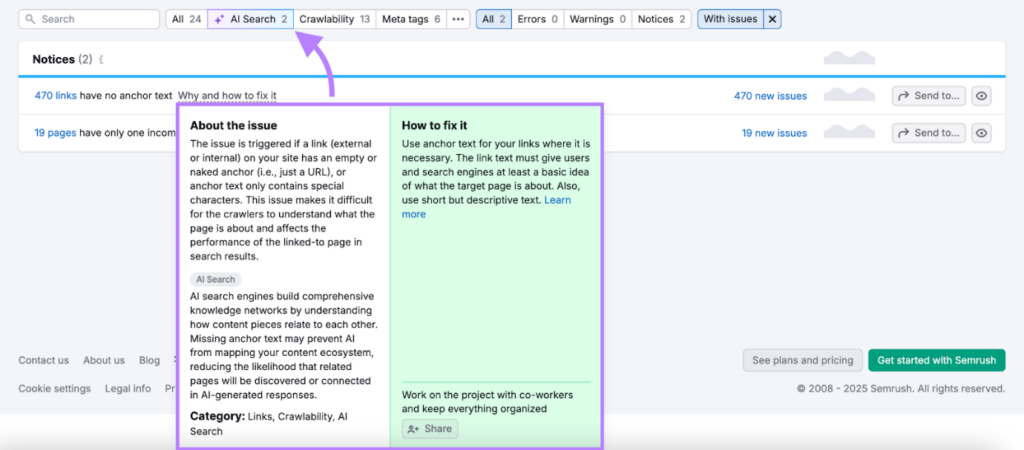
Every week, run a “visibility pulse check.” Test 2–3 real prompts in ChatGPT, Perplexity, and Gemini, and log which domains appear.
Track:
-
Mentions and citations in AI Overviews (via Ahrefs Brand Radar or Semrush)
-
Branded queries in ChatGPT, Gemini, and Perplexity
-
Traffic quality from AI-sourced visitors
Listen:
-
Check Reddit, Quora, and social chatter for questions your brand should be answering but isn’t yet
-
Monitor negative mentions — AI doesn’t differentiate tone as much as frequency
If you notice paraphrased ideas with no credit, record them. It indicates the model has learned from your content but forgotten your brand — a fixable issue, but only if caught early.
Monthly: Update, Prune, and Repurpose
Each month, audit your content like it’s inventory. Ask three brutal questions:
- Is this page still accurate?
- Is it still ranking or cited anywhere?
- Is it worth refreshing – or retiring?
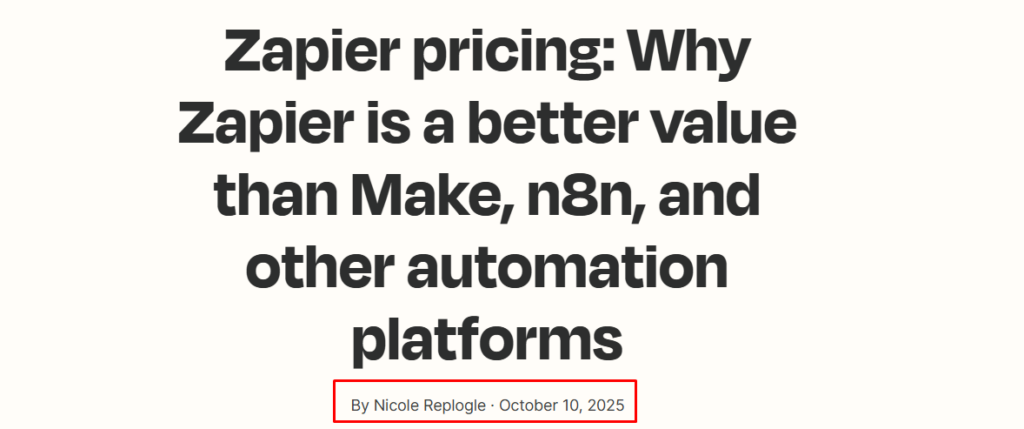
Zapier’s team runs this like clockwork, and it’s one of the reasons their content never stagnates. Every article has a version number, a review owner, and an “updated” timestamp. That’s SEO maturity in an AI-first world.
What to do each month:
- Refresh at least 10% of your top URLs with new data or examples.
- Add updated schema or FAQ markup.
- Publish one “What We Learned” post – AIs love structured, reflective updates.
- Use Semrush’s AI Visibility report to identify emerging questions you could answer.
If you’re short on bandwidth, outsource this refresh rhythm to a partner that can keep your content alive, or better yet, a team like Crowdcreate that can also distribute those updates through PR, influencers, and niche communities to make sure the algorithms see (and re-cite) them.
Structured Quarterly Reviews to Strengthen Content
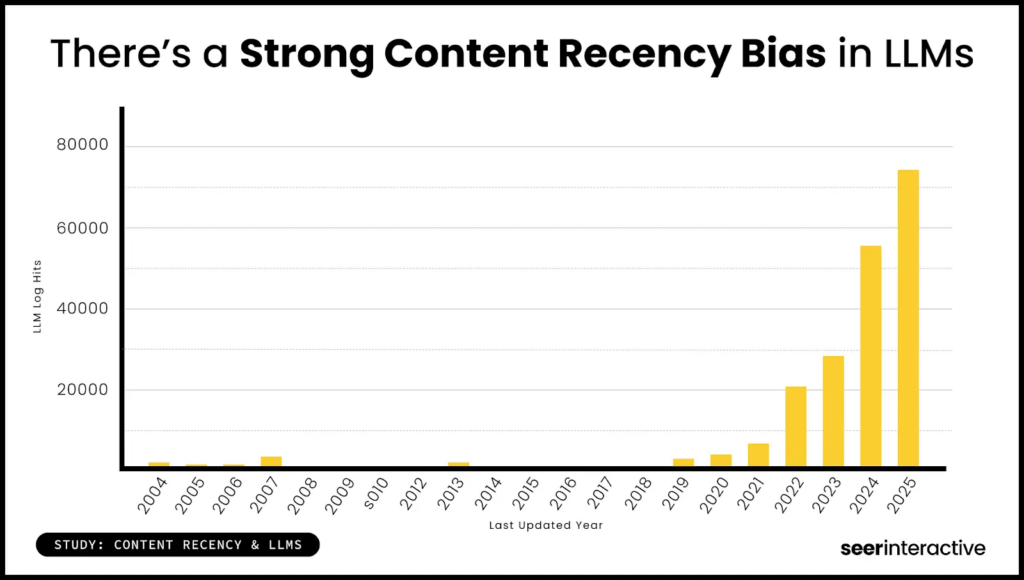
Quarterly Deep Dive: Audit Your AI Visibility
Every quarter, go beyond simply reviewing what you’ve published — measure how your content performs across AI-driven ecosystems.
Your AI visibility audit should cover:
-
Which articles are consistently cited in AI answers
-
Which pieces have dropped out of overviews or chatbot responses
-
How your “share of voice” compares to competitors
-
Where your zero-party data is gaining traction (press mentions, podcasts, communities)
-
Whether your entity structure (author bios, About pages, schema) still aligns with AI and search expectations
Action Tip: Reinvest in what’s working, and retire or consolidate what’s not. Consistency beats bursts — it’s better to publish one high-quality update every week than a major overhaul every six months.
Yearly Strategy Repositioning: Assess Your AI + SEO Overlap
Once a year, step back and ask:
“Are we still being quoted for the right things?”
This is your moment to reassess AI and SEO overlap, determine what queries you dominate, identify lost ground, and explore new vertical opportunities.
Look for growth areas like:
Entity expansion: Add new expert authors or product categories
Data partnerships: Publish joint studies or reports to generate fresh zero-party insights
AI distribution upgrades: Test whether platforms like Gemini, ChatGPT, or Perplexity now index new content formats (videos, podcasts, PDFs)
Pro Tip: Partnering with agencies like Crowdcreate turns this into a long-term strategic advantage, not just campaign support. They help reframe messaging, rebuild community momentum, and ensure your data and thought leadership echo across networks.
Building the Habit Loop: Visibility as a Compound Effect
AI visibility is a compounding habit, not a campaign. Here’s the loop we teach every client team:
Research → Identify trending AI queries
Create → Publish answer-ready content backed by real data
Distribute → Share via influencer, community, and PR channels (hello, Crowdcreate)
Measure → Track mentions, paraphrases, and citations
Refresh → Update, improve, or republish as needed
Repeat → Keep the cycle continuous
Why It Works: This loop builds algorithmic memory. The more consistently you feed AI systems with credible updates, the more the models start assuming your brand belongs in their answers.
Result: You move from “a site that ranks” to “a brand that gets referenced.”
How to Future-Proof SEO for Agentic AI
If the last two years of AI and SEO felt fast, the next phase will move even quicker. The future is no longer about summaries or links, it is about agents. Chatbots are becoming full digital assistants that can search, compare options, complete transactions, and schedule actions without users ever opening a browser. Visibility is no longer just about being discovered, it is about being selected by software that reasons and acts. For brands looking to stay ahead, partnering with an AI marketing agency can ensure strategies are designed for this agent-driven era.
SEO.co’s 2025 report describes this transition as the rise of agentic AI, where intelligent systems operate on behalf of users. Copilot is already capable of booking flights, Perplexity’s Pro Agent performs multi-source research, and OpenAI’s Custom GPTs can pull directly from verified company APIs. These systems are not browsing, they are deciding.
Competing Inside an Agent’s Decision Tree
In an agent-driven environment, brands are not competing for clicks, they are competing for inclusion. AI agents build decision trees based on trust, structure, and usability. Only sources that are reliable, machine-readable, and easy to act on are considered. This makes structured data, stable APIs, and transparent documentation essential. Agents rely on clearly defined inputs and outputs, not marketing language. If information is hidden, unstructured, or outdated, the agent simply skips it. Working with an AI marketing agency can help brands structure their content and data to meet these standards effectively.
Preparing Content to Be Machine-Actionable
Future-proofing content means making it usable by machines, not just readable by humans. Providing open API endpoints or clean CSV downloads allows agents to access data directly. Public, up-to-date documentation is critical, as systems like Gemini and Perplexity actively crawl it to understand capabilities and limits.
Transactional steps should be marked clearly using schema such as Product, Offer, FAQ, Review, or HowTo. Prices, return policies, and availability must be presented in clean HTML so agents can interpret them without ambiguity. Clearly defined steps and outcomes help agents execute actions confidently rather than just summarize information. An experienced AI marketing agency can guide businesses in implementing these machine-actionable structures.
The Next Level of AI Ranking
Tools like Rankability and LLMRefs can help confirm whether a brand is appearing inside agentic AI decision paths, not just traditional search results. This visibility matters because when an agent compares options, books services, or cites information, it only uses sources it trusts and can act on.
That is the next level of ranking in the age of AI. It is no longer about position on a page, but about being operationally usable by intelligent systems. The brands that win will not just be informative, they will be machine-actionable, and leveraging an AI marketing agency can make this transition seamless.
Publisher Partnerships & Licensing Deals
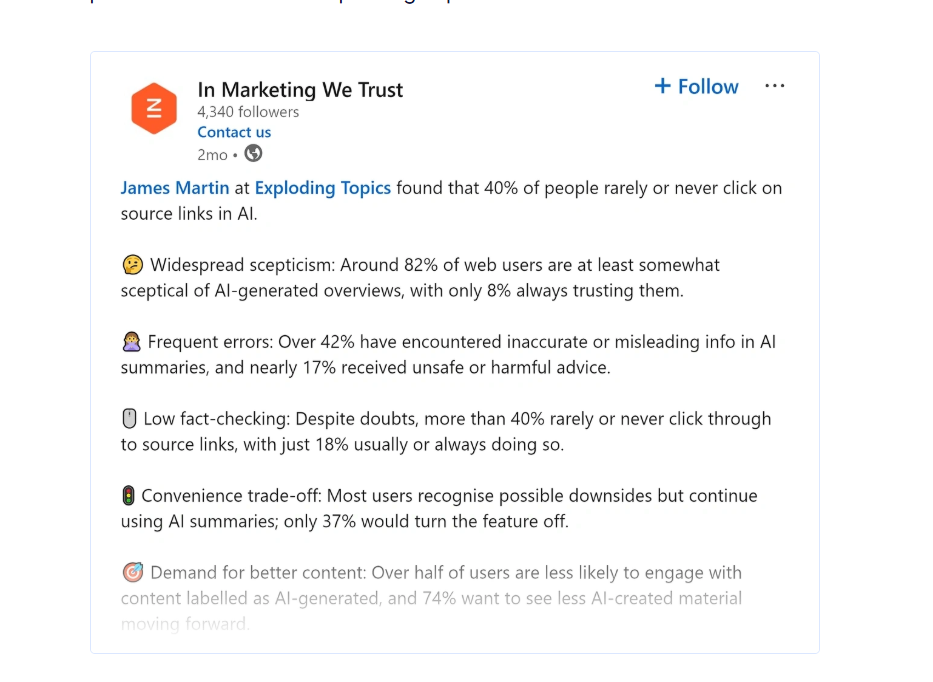
Search Engine Land’s 2026 report revealed a quiet but meaningful shift in how AI visibility is earned. AI models are no longer just crawling and summarizing content, they are licensing it directly from publishers. Deals like The New York Times partnering with OpenAI, Reddit’s agreement with Gemini, and Stack Overflow’s API partnership are not publicity moves; they represent a new class of SEO alliances where access and authority replace rankings.
This shift is not limited to large publishers. Smaller brands can participate by making their expertise accessible in ways AI systems can legally and technically use. Offering proprietary datasets such as surveys or benchmarks through micro-licensing, syndicating articles on platforms like Medium or LinkedIn Pulse with proper canonical tagging, and producing co-authored research with universities or think tanks all create quotable, reusable assets that AI models value.
In this environment, AI visibility may no longer be defined by ranking positions at all. Instead, it may come from licensing expertise, where your strongest content becomes training material that returns value through citations, recall, and long-term brand equity.
Building Agent-Ready Content
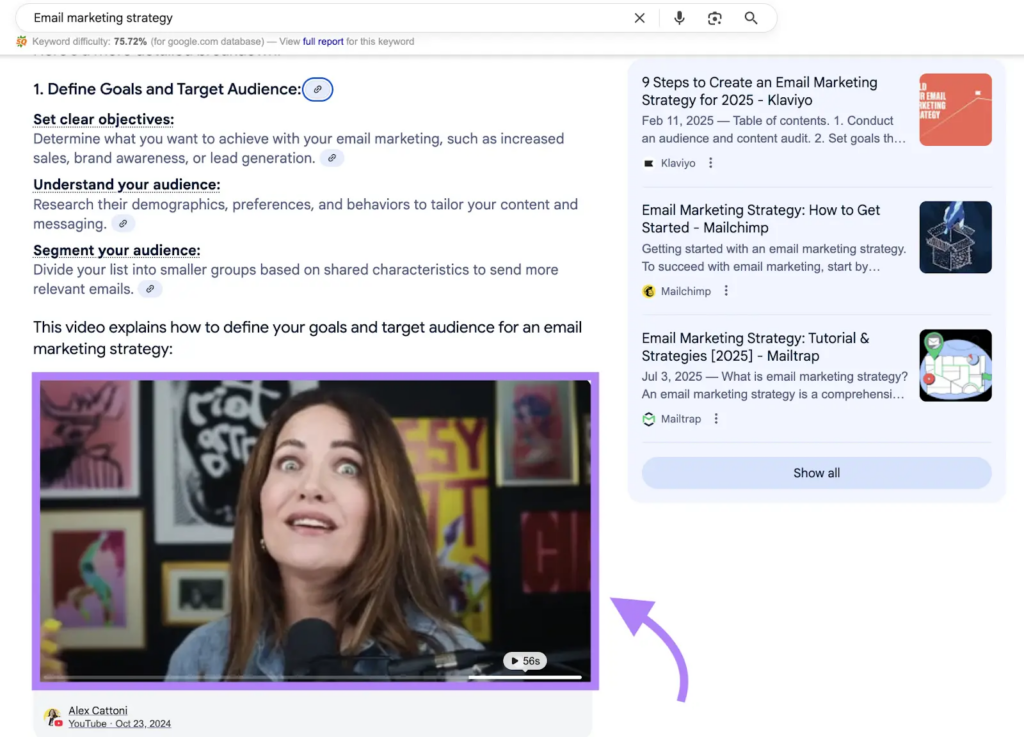
If traditional SEO is for humans and AEO is for LLMs, agentic optimization is for automation.
Practical steps:
- Label your content with structured actions (HowTo, Product, Service).
- Expose metadata – opening hours, inventory, contact channels.
- Add machine cues: explicit pricing, version numbers, changelogs.
- Integrate conversational affordances: “Ask our bot about pricing” links or embedded Q&A JSON that agents can parse.
In short: write for two audiences- the curious human and the busy AI assistant.
Predictive Content & The Feedback Loop
In 2025, reports found that pages updated at least quarterly maintained 73 % higher AI citation retention than static pages. That’s because newer models re-crawl, re-score, and retrain constantly.
Your visibility half-life is shrinking. To survive, you need predictive publishing, anticipating what next month’s agents will need.
Do this:
- Track emerging question clusters in Ahrefs and Semrush Labs.
- Use brand radar tools to identify rising entities around your niche.
- Publish “pre-answers” before the market catches on.
- That’s how you own tomorrow’s prompts before anyone else writes them.
Partnering for Scale
Here’s the truth: future-proofing visibility takes more than great content. It takes distribution muscle, network access, and social proof on steroids.
That’s where companies like Crowdcreate become a strategic ally. Their role in this next frontier:
- Narrative Architecture: turn your zero-party data and research into stories media and AIs both quote.
- Influencer Mesh: coordinate creator networks so your insights appear across YouTube, LinkedIn, Reddit, and podcasts -the places AI agents over-sample for trust.
- Community PR: seed discussions in relevant communities so your brand becomes a persistent data point in model training loops.
- Executive Visibility: get founders interviewed, quoted, and referenced by verified experts – cementing entity authority.
When models retrain, they don’t remember ads; they remember consensus. Crowdcreate helps you build that consensus faster than your competitors can type their next prompt.
The Future Forecast (2026 and Beyond)
Three major shifts are already taking shape. The first is personalized AI search, where answers are tailored to individual user profiles and visibility depends heavily on true niche authority rather than broad reach. The second is multi-modal citation, where videos, podcasts, slide decks, and other formats count as sources, making transcript quality and clarity increasingly important. The third shift is the rise of trust graphs, where brands earn algorithmic trust scores based on verified data, consistency, and third-party mentions across the web.
By 2026, AI and SEO strategies will move beyond optimization into governance. Brands will need to manage their digital twins carefully, ensuring information is accurate, ethical, and consistently represented across every intelligent interface where AI systems operate.
How to Stay Ready
Staying visible in this environment requires deliberate, ongoing action. Publishing zero-party data directly from your audience helps establish originality and trust. Structured markup should be refreshed every quarter to keep information readable and current for machines. Expanding into multi-modal formats such as video with high-quality transcripts increases citation opportunities, while cross-platform consistency across LinkedIn, Wikipedia-style references, and press coverage strengthens credibility. Investment in amplification and relationship equity, what Crowdcreate refers to as trust velocity, helps accelerate how often and where your brand is remembered.
The brands that win in AI-driven ranking environments will not simply have the best content. They will be the ones whose names appear consistently wherever facts are gathered, discussed, and validated.
The Bottom Line
The web is shifting from links to learning loops. Content is no longer a destination; it has become an ingredient in someone else’s answer. Future-proofing now depends on two things: being technically accessible and culturally unavoidable. Structure delivers accessibility, while distribution delivers inevitability. Together, they form the real power of SEO and AI working as a system.
Keeping data clean, voice human, and networks active is no longer optional. The next generation of algorithms will not just index authority, they will inherit it from the signals you leave behind.
You Don’t Outrank AI, You Feed It
Looking back at recent shifts in search, the pattern is familiar. Every major change triggers panic, followed by adaptation and eventual evolution. The same voices that once claimed blogs were dead now spend hours reading Substacks. Those who argued social media killed SEO are now watching AI and SEO merge into something more powerful than either alone.
AI did not kill discovery. It refined it. It removed noise and rewarded brands that demonstrate real understanding. Visibility is no longer about manipulation; it is about truth, consistency, and contribution. If you have reached this point in the guide, you are already aligned with that shift.
The Five Imperatives for the New Era
Creating original, verifiable data is the strongest moat a brand can build. Surveys, first-party research, and honest insights cannot be scraped or replicated easily. Formatting content for instant answers through summaries, schema, tables, FAQs, and timestamps is not bureaucracy, it is accessibility. Publishing content in open, fast, machine-readable HTML ensures both humans and AI can access it without friction.
Earning mentions through communities and media increases statistical gravity, the repeated exposure that makes a brand unavoidable in AI responses. Measuring performance relentlessly and refreshing content without hesitation keeps visibility from decaying. Weekly checks, quarterly audits, and annual repositioning create the rhythm that sustains long-term presence.
The Final Thought
When all the terminology is stripped away, AEO, GEO, structured data, prompts, and emerging standards reduce to one simple rule: if you feed AI something worth learning from, it will remember you.
That is the new contract between brands and machines. Provide original insight, human perspective, and structured clarity, and AI systems will return visibility, trust, and customers. Ignore it, and you risk disappearing inside the most powerful distribution system ever created.
Stop chasing rankings. Start building references. And if you need help turning those references into lasting authority, work with partners who know how to make stories echo, like Crowdcreate. In the end, you don’t outlast AI by gaming it. You outlast it by feeding it something real.
