Introduction
NFT projects seem to be everywhere and involve everyone these days. They’ve evolved from nerdy tech gamer experiments into high art and highly-sought collectibles, with high price tags to match.
From former First Lady Trump to the NBA’s Philadelphia 76ers, from Snoop Dogg to Dolce & Gabbana, NFTs are making news all across the cultural spectrum.
And some of that news shows up on financial pages when those nerdy NFT projects start making millions, even billions, of dollars for their creators and investors.
Today, we’re taking a look at some of 2021’s highly successful NFT projects. We’ve already covered the biggest in the art, gaming, metaverse, and collectible arenas in previous articles. Now, we’re going to take a closer look at some smaller, but no less impressive, projects.
Some of these projects may be familiar, while others have stayed on the edges of the NFT and crypto world. They’ve all seen surprising success, and they have something to teach us about NFT marketing.
Let’s dive in, shall we?
CrypToadz: NFT Marketing From Scratch
In January 2021, the CrypToadz anonymous creator, Gremplin, had already begun building a small following in the NFT world. And he did it mostly by trial and error.
He first began in the CryptoKitty universe, flipping Kitties with some success. Then, he tried his hand at creating his own art. It wasn’t nearly the success he’d hoped it would be. So, what do you do when you are a failing artist?
You imitate.
Gremplin reports looking around at what was selling and landed on the idea of “things spinning around in 3D.”
However, he had no experience with 3D art, so his first attempts were bits of wool and cardboard that he then photographed spinning. He was moderately successful at selling these physical-to-digital creations.

Once he realized that the NFT “wave was more like an ocean,” Gremplin got a bit more serious about things.
He got heavily into the Nouns NFT project, and followed that with Weird Whales in July. In each case, he made his own slightly “punker” version of the respective NFT.
With his Whales derivative, he landed on “Freaky Frogz,” which eventually “portmantoad into CrypToadz.” The name is an homage to the CryptoPunks project that had inspired this and other projects he’d been riffing on.
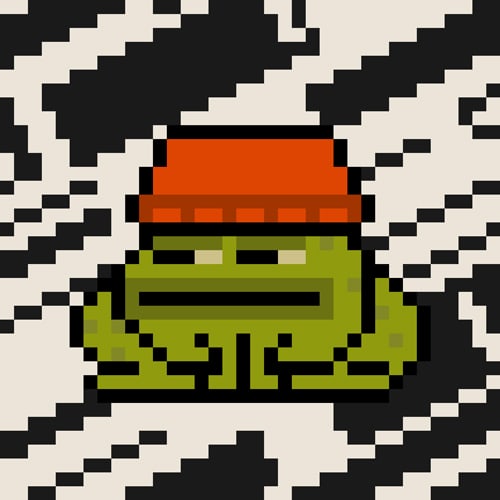
The Toadz collection sold out in 15 minutes, with just one going for over $300,000, thanks in great part to influencers from the NFT and crypto communities that Gremplin had become a part of.
He’d become a “name” in the industry, and now other “names” wanted to give him his due.
Also crucial to the Toadz success was the team of friends that Gremplin had joined, who helped make the project a reality.
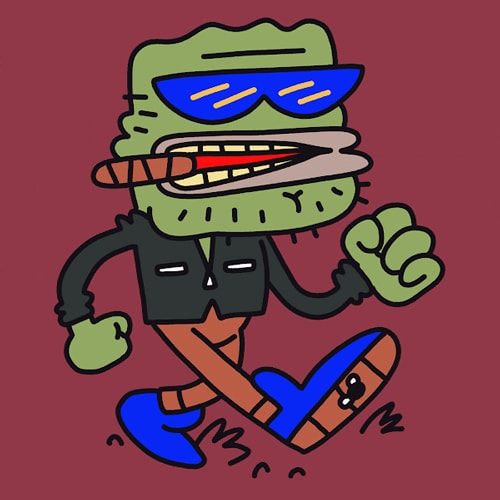
The unique, and very un-artisty thing, about CrypToadz is that Gremplin has made all 6,969 of them public domain, with no rights reserved. That means that anyone, anywhere, can use any Toadz for any reason, as long as they follow the Creative Commons CC0 agreement.
What’s next for Gremplin and his group of froggy friends? Who knows? He says they have a “toadmap” but it’s not really a plan. Their future lies in whatever they can come up with next.
Takeaways for Your Own NFT Marketing
Here are four key things we can learn from Gremplin and the CrypToadz:
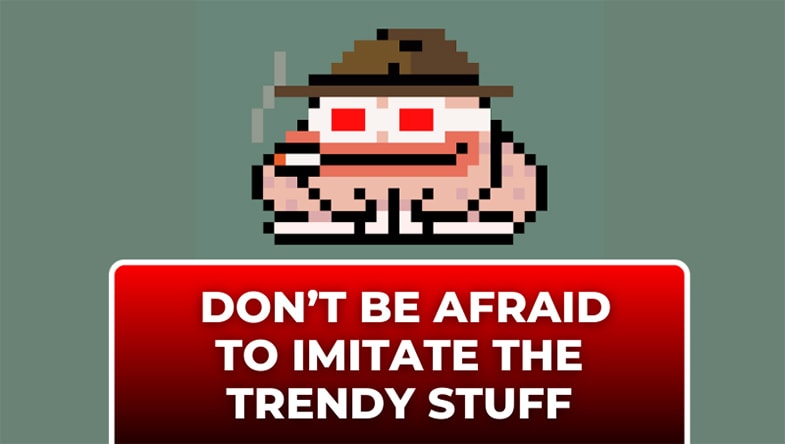
- Don’t be afraid to imitate the trendy stuff. Gremplin started with “things spinning in 3D” because it was the hot new thing. All artists begin by copying and imitating the great masters. Put your own spin on a hot trend to capture the same audience.
- Don’t go it alone, part I. Gremplin had his team of friends. The OGs, Matt and John of CryptoPunk fame, had each other. The most successful projects are collaborations between people who can keep the project (and artist) moving forward.
- Don’t go it alone, part II. Gremplin had influencers to help launch his big project. After a team of motivators, you need a team of movers and shakers. Crowdcreate can hook you up with the best microinfluencers in your niche. It’s what we do.
- Be as unique in some aspects as your NFTs are. Gremplin made the Toadz public domain art. We’re not saying you have to follow his example, just that you should have a unique and different angle on your NFT project, too.
Katherine Frazer: NFT Marketing With an Eye for the Sublime
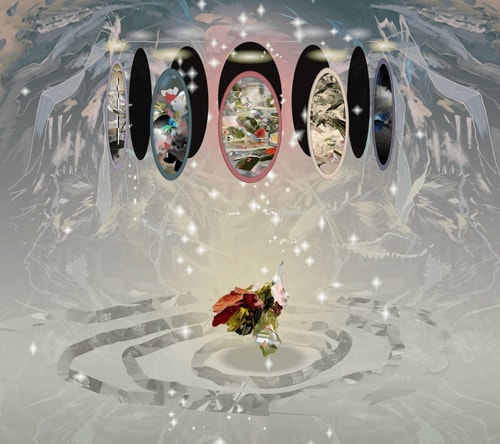
NFT artist Katherine Frazer combines iPhone photos, screencaps, training in the Japanese art of ikebana flower arranging, and a keen interest in exploring the “social implications of consumer technology” into sublime, beautiful works of NFT art.
Granted, Frazer works for Apple as a designer in their apps division, so she knows her way around all that consumer tech.

Her art has been described as surreal, psychedelic, and sublime. The animated or moving pieces tend to remind the viewer of looking through a kaleidoscope or marblescope. They sell for thousands of dollars each.
She’s received commissions to create artwork for none other than MTV and was one of the first 50 NFT artists invited to join the new creative collective that strives to “bridge crypto and culture.”
Frazer has taken a more “traditional artist” route to gaining popularity and exposure for her artwork. She’s become involved with online galleries and exhibitions, taking part in online art shows like the one sponsored by the wrong.
Most NFT artists aren’t that subtle, but like her artworks, Frazer seems to have carried that hint of the sublime into her NFT marketing. She doesn’t scream for attention. She just quietly and carefully stands out through the uniqueness and quality of her art.
Key Takeaways for Your NFT Marketing
Katherine Frazer can teach you two very valuable lessons about marketing your own NFT projects. They are:
- You can be true to your art and still be successful with NFTs. While many NFTs, like the Punks, Toadz, and apes of the BAYC, are simplistic, even “ugly” pixelated art, Frazer’s art typically reminds you of something your mom or your grandma might hang above the dining table. It’s lovely. It’s sophisticated. It’s sublime.
- You can use less techy, trendy ways to make your name. Katherine got her artworks into both online and print magazines, many dedicated to art and culture, not tech and crypto. She has LinkedIn and Instagram accounts. She grew her following in the art world first and then made a name in the NFT universe.
art blocks: NFT Marketing for the Tech Savvy
art blocks (no caps) is an NFT art platform for those that use computer code to create generative artworks. The buyer never knows exactly what the artwork will look like, as each piece is created on-demand and the outcome depends entirely on the algorithm chosen.
The artwork is then stored on the Ethereum blockchain and is yours to keep or sell as you wish.
If you aren’t into blindly buying digital artworks, there is also a curated collection where artists who use the generative technique have DFY artworks available for sale. We’re going to explore one of those artists in further detail.
Monica Rizzoli and “Fragments on an Infinite Field”
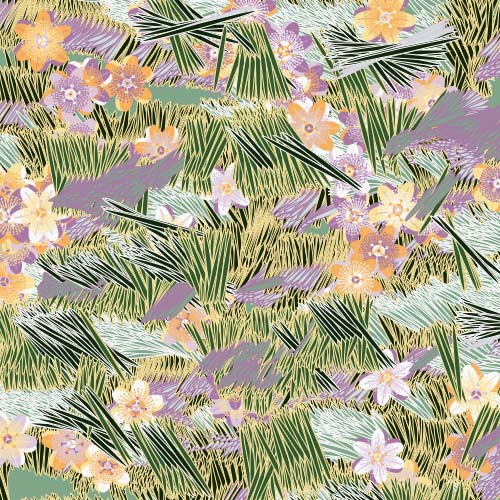
In our minds, Monica Rizzoli’s NFTs resemble the paintings of Monet or perhaps the Japanese masters. They are impressionistic-looking florals, generated by variables chosen by her algorithm to mimic real floral attributes like number of petals and seasonal colors
Several things set Rizzoli apart in the NFT world.
One, she’s a woman. While women in the NFT field are growing in number and popularity, it’s still very much a man’s game.
Two, she’s Brazilian. You tend to think of beaches and Carnival, steamy nights and tapas plates, rather than high-tech, trendy NFTs, when you think of Brazil.
Three, she’s strictly a generative artist. She’s made her name in the digital art world by using code to create art.
And just how successful has she been in the world of generative NFTs? Her 1,024 piece “Fragments” collection sold out in under an hour and netted over $5 million.
Takeaways for Your NFT Marketing
There are three things we can learn from the success of art blocks and their artists. They are:
- Generative art can produce pieces that aren’t techy, like the AutoGlpyhs or the Merge. You can program your algo to create just about anything you want, including mesmerizing florals.
- Creating a platform for other artists can also lead to success in the NFT world. Christie’s auction house recently held an auction of art generated on the art blocks platform. That’s pretty big time for any art site.
- You don’t have to have a big following or even a big name to make it big in the NFT art world. Rizzoli doesn’t have more than a few thousand social media followers. Not exactly what you’d call an “influencer” in her field.
Summary
When it comes to your NFT project, whether it’s a collection like the Toadz or Rizzoli’s “Fragments,” there is no one right or wrong way to go about your NFT marketing.
Here at Crowdcreate, we have had many successes with influencer marketing, matching those “names” in the crypto, gaming, and art worlds with our NFT clients.
We figure if it works for the big projects like Star Atlas and Lenovo’s mini projector, and if it can turn little projects like the Toadz into a big deal, it’ll work for your NFT project, whatever its size and shape.
Contact us today to discover just what sort of future you and your NFT project can be a part of.
Share on Twitter: