
ChatGPT is now one of the most popular website applications (and sites) in the world. Even as new generative AI apps (like Google Gemini or Copilot) emerge, ChatGPT still earns more traffic than virtually any other site. In 2023, more than 1.4 billion people were visiting the app each month.
A lot of companies, including the team here at Crowdcreate, have already discovered the benefits of using ChatGPT to scale content creation, optimize pages for the search engines, and increase traffic.
In fact, about 48% of companies admit to using ChatGPT for content creation.
What you may not know, is that ChatGPT can help drive traffic and opportunities to your business in another way – by actually recommending your company to customers.
Increasingly, rather than filtering through endless companies on the SERPs, B2B and B2C companies are turning to ChatGPT, for its insights on who to work with.
That means if you can get ChatGPT to actively endorse your brand, your chances of sales skyrocket.
So, how do rank your website on ChatGPT, and earn all that crucial traffic?
I’m going to share all the secrets I know, right here.
Why Learn How to Rank Your Website on ChatGPT?
Ultimately search engines like Google are still crucial if you want to earn as much organic traffic as possible in 2024. But the way people search for information is changing. Ultimately, generative AI does a lot of the hard work for us when we’re conducting product research.
If I search for “the best AI marketing agencies” on Google, I get a whopping 341,000,000 results. Typically, I also ignore the first few suggestions, simply because I know they’re sponsored ads:
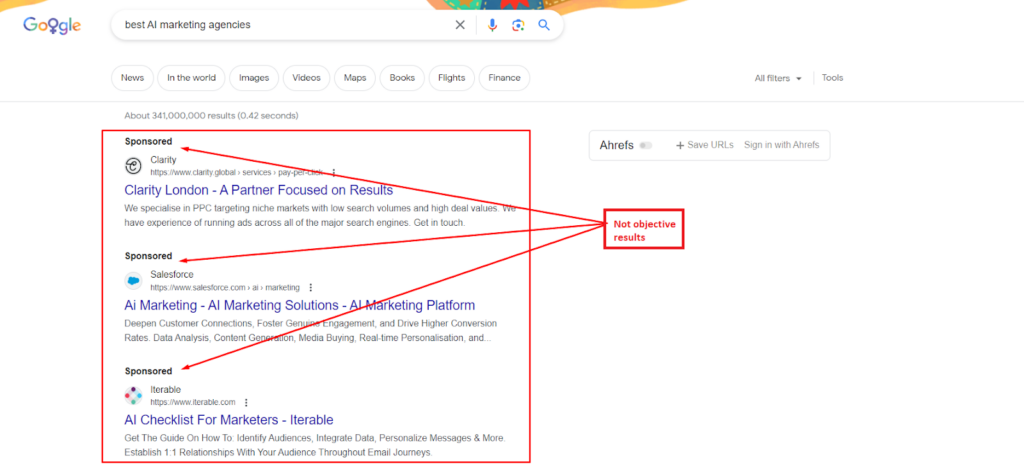
I could spend hours checking out the websites, case studies, and reviews of every single website that offers “AI marketing”. But why bother with all that work, when I can get a bot to do it for me?
Generative AI bots like ChatGPT can scan through hundreds of sites in an instant, account for testimonials, and track popularity, to narrow down my options in seconds.
Even search engines know how valuable this is. For instance, Google is already experimenting with using its Gemini Large Language Models to improve search results, and they say the tech is leading to a 40% faster search experience for customers.
Learning how to rank your website on ChatGPT, means you can earn more traffic, from customers who are looking for quicker answers to their questions.
How to Rank Your Website on ChatGPT: The Experiment
To figure out how companies can earn ChatGPT website traffic, the first thing I needed to do was get my head around how the bot recommends products and brands to consumers.
That meant donning my white lab coat for a quick experiment.
To begin, I started with a simple question, focusing on something we specialize in at CrowdCreate: “Which are the top 5 best NFT marketing agencies?”
After waiting for a couple of minutes (ChatGPT was running slowly at the time), I got this response:

It’s a helpful list, but not entirely accurate. Ampersand Collective doen’t focus on NFTs, and they don’t mention NFT companies anywhere at all on their homepage. I also couldn’t find any company at all called the “NFT Marketing Agency”.
So, not a great start.
I decided to dive a little deeper, and ask ChatGPT which factors it considered when creating the list. Here’s what it said:
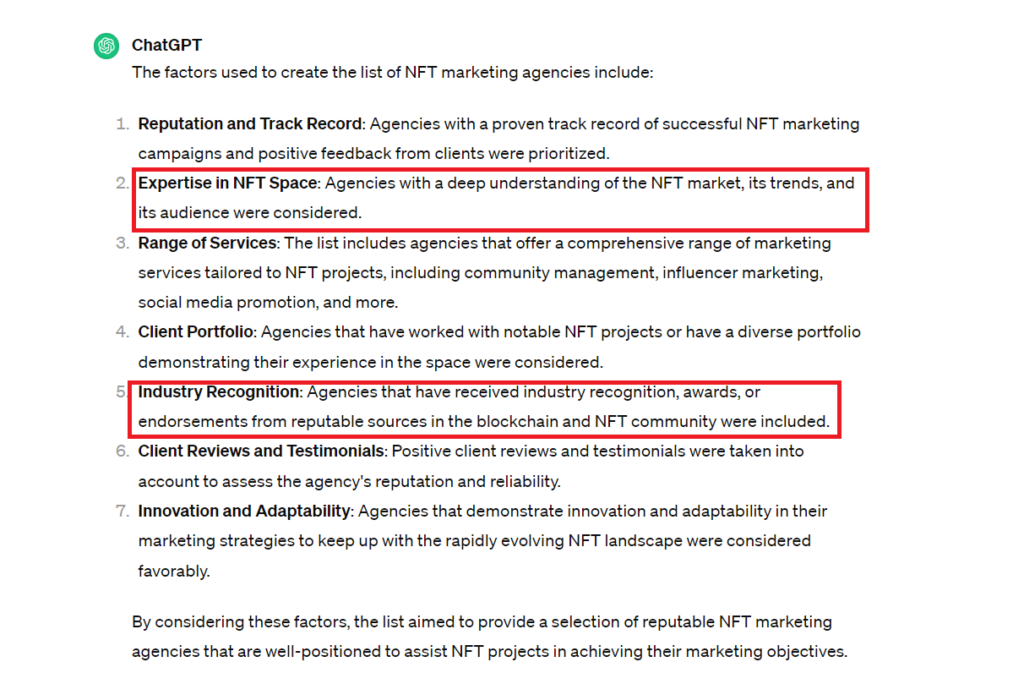
First of all, I’m not convinced ChatGPT really used all these factors at all. After all, Ampersand’s website doesn’t show any expertise in the NFT space, or any evidence that they’ve won awards for NFT marketing.
So, let’s dive deeper again:
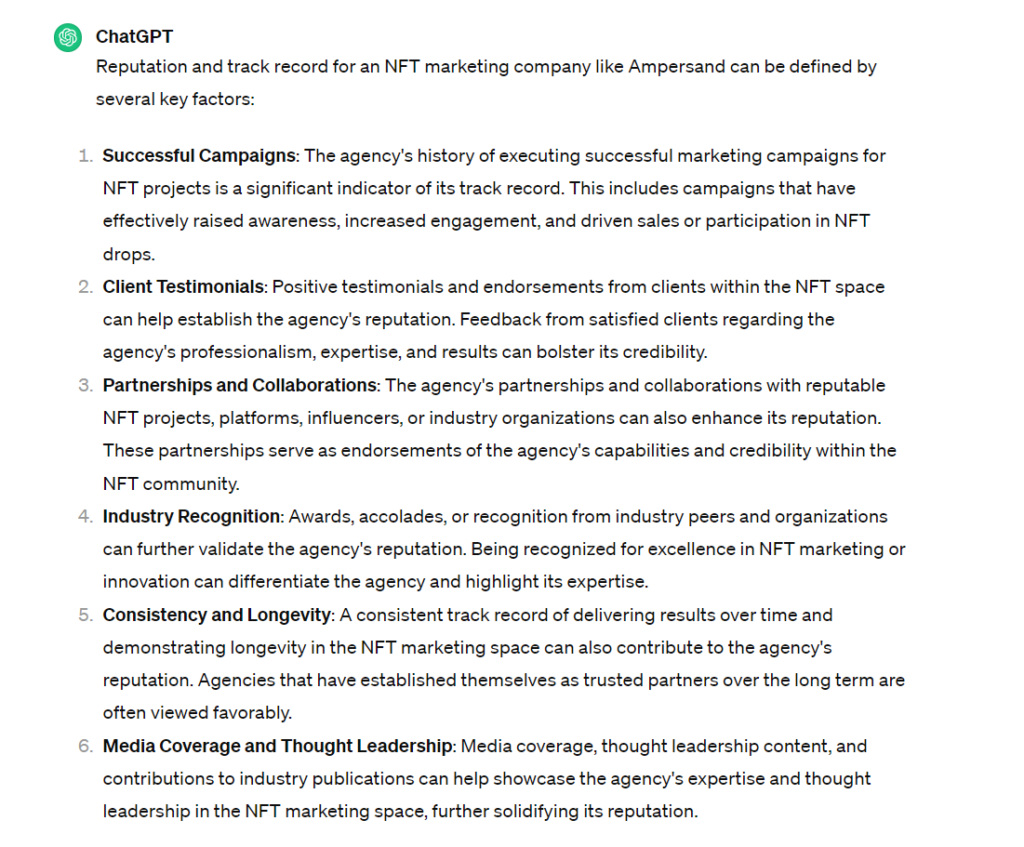
Clearly, there’s a bit of an issue here. It seems like ChatGPT is just generating answers based on what it considers to be “best practices” for choosing an agency, without going any deeper.
How to Rank Your Website on ChatGPT: Experiment Mk 2
Ultimately my experiment with the free version of ChatGPT didn’t prove particularly fruitful. But I thought the reason for this might have something to do with the app not being able to actually browse the internet. The standard ChatGPT app can only use the data it’s gathered up to a certain point.
So I tried again, with the paid app:
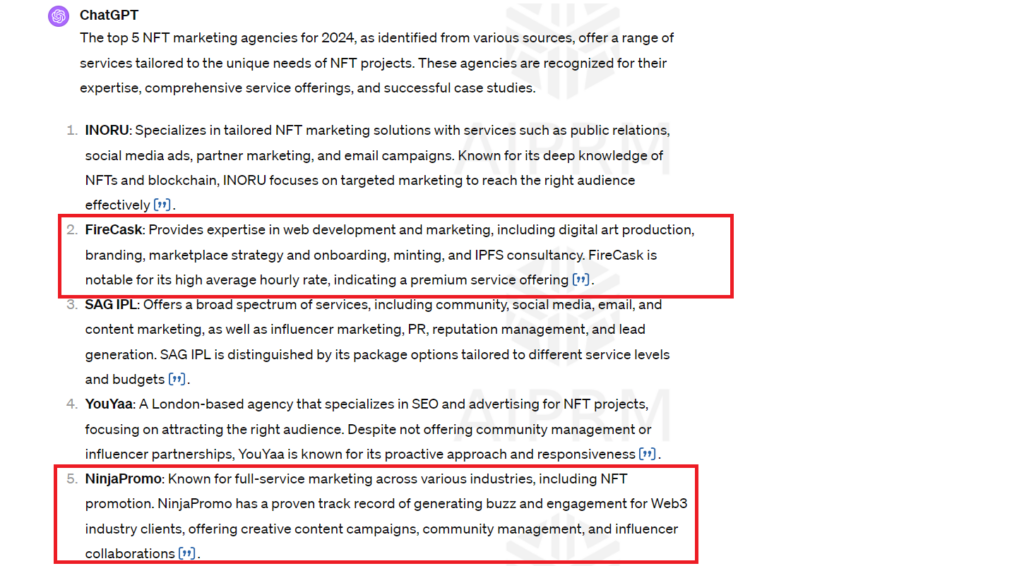
Clearly, this response is a little better and more “up-to-date”. It also includes actual references to the companies it’s mentioning, which is a nice touch. But there are still issues. SAG IPL is a blockchain marketing and web solution agency, but it’s more focused on NFT development than marketing.
Ninja Promo is a full-stack company that does offer some NFT marketing, but doesn’t specialize in the NFT landscape.
So let’s ask again why ChatGPT gave me this list.
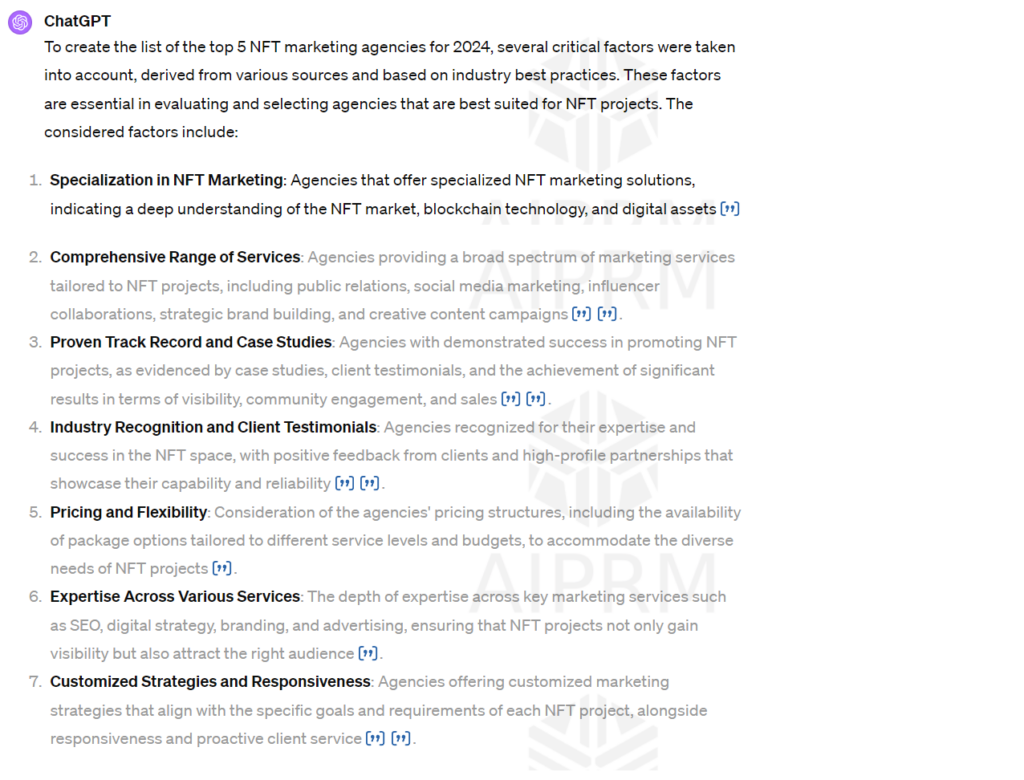
The answer’s pretty similar to what I got from the free app – albeit a bit more comprehensive.
So, How Does ChatGPT Rank Websites?
I asked ChatGPT a lot of different questions to try and figure out exactly what caused it to promote some sites over others, but it didn’t come up with anything particularly useful. Really, all I got was regurgitated lists of “best practice” guides for choosing reputable agencies.
So I figured, let’s look elsewhere for answers, and I found Niel Patel’s own experiments with ChatGPT and it’s ranking factors.
Niel had already done some of the work for me, taking his data to a statistician to look for patterns in ChatGPT suggestions. He found that 6 factors showed up time and time again when it comes to earning ChatGPT website traffic.
I decided to replicate his experiment, and here’s what I found out:
The Ranking Factors that Matter for ChatGPT:
One point I want to note here is that how ChatGPT ranks websites varies depending on whether you’re using the paid version, or the free version. The free version doesn’t have access to the internet, so it can’t provide any up-to-date insights based on recent information.
The paid version of ChatGPT wants to focus on giving up to date answers, so you’re more likely to get insights into websites that are ranking highly or generating a lot of attention in the moment.
Here are the things I’d recommend focusing on for the best results:
1. High Numbers of Brand Mentions
ChatGPT either draws information directly from its vast data repositories, or combines that data with information obtained from the web. Like most LLMs, the technology can’t form opinions on its own, so it suggests responses based on what it thinks is the most likely answer to your question.
If ChatGPT scans the internet, or its database and sees multiple mentions of a specific brand connected to the thing you’re looking for, such as “NFT marketing”, then the companies that have the most ties to that word will be the companies it recommends first.
For instance, if we search for “FireCask NFT marketing” we get about 1,160 results:
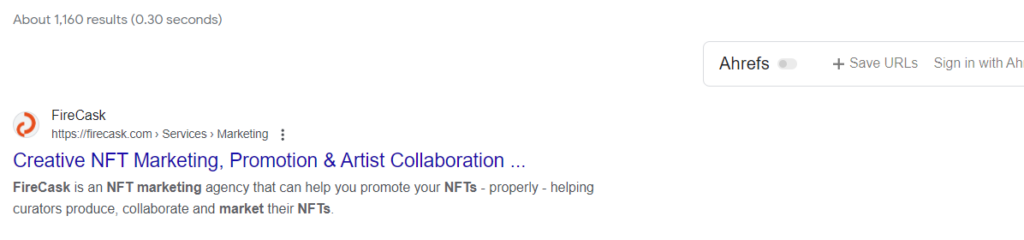
That’s probably part of the reason why ChatGPT recommended the brand. However, clearly mentions aren’t everything, since there are almost 6 times as many results when we search for “CrowdCreate NFT Marketing”:
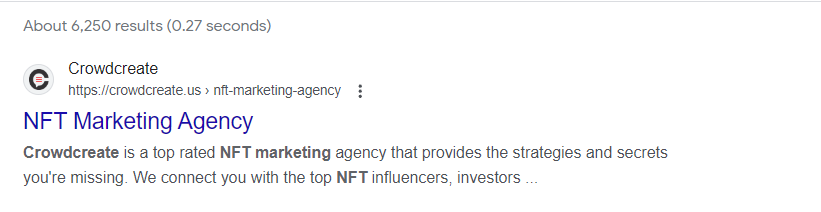
So mentions are important – but they’re not everything.
2. Reviews and Recommendations
Time and time again, when I asked ChatGPT to explain why it chose to recommend a specific agency to me, one of the first things it mentioned was a company’s track record and reputation. Again, it’s difficult to know how seriously ChatGPT takes these things.
I couldn’t find a lot of reviews or recommendations related to NinjaPromo’s NFT marketing campaigns on Google.
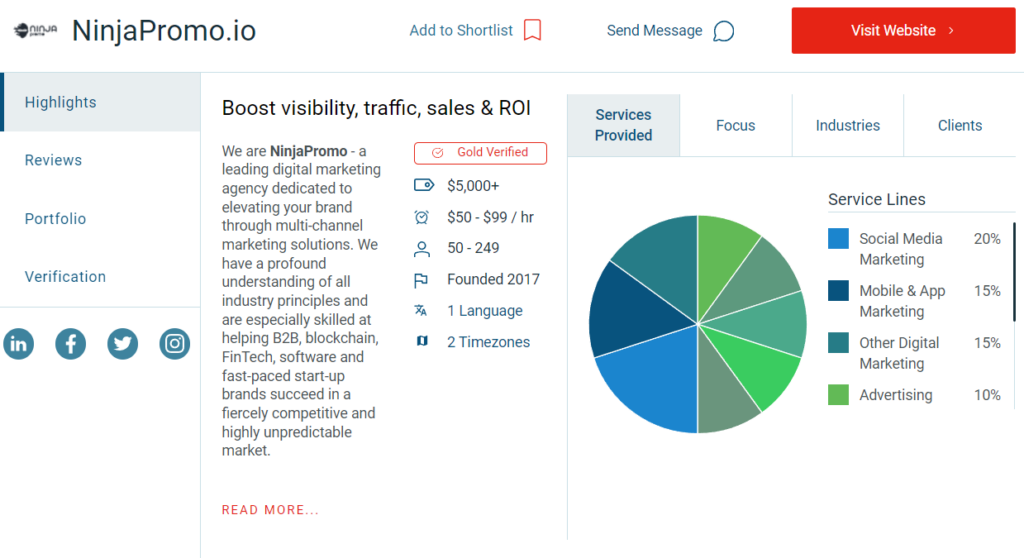
https://clutch.co/profile/ninjapromoio#highlights
Plus, I definitely couldn’t find many reviews for some of the company’s the free version of ChatGPT mentioned.
Still I think it’s worth increasing your credibility with testimonials and reviews either way. After all, we know Google takes your experience and expertise into account when ranking your site on the search engine results pages, so it makes sense that ChatGPT would do the same.
I’d advise looking for as many ways as possible to boost EEAT scores with user-generated content, and reviews both on your website and external platforms, if you want to earn ChatGPT website traffic.
3. Topical Authority
Topical authority is a common SEO concept wherein a website aims to become the go-to authority on a specific topic. It’s a good way to show the search engines you have a lot of knowledge in your specific space, and boosts your EEAT scores.
For ChatGPT, showing topical authority is a way to connect your company with as many different synonyms and terms you want to rank for in the app’s database.
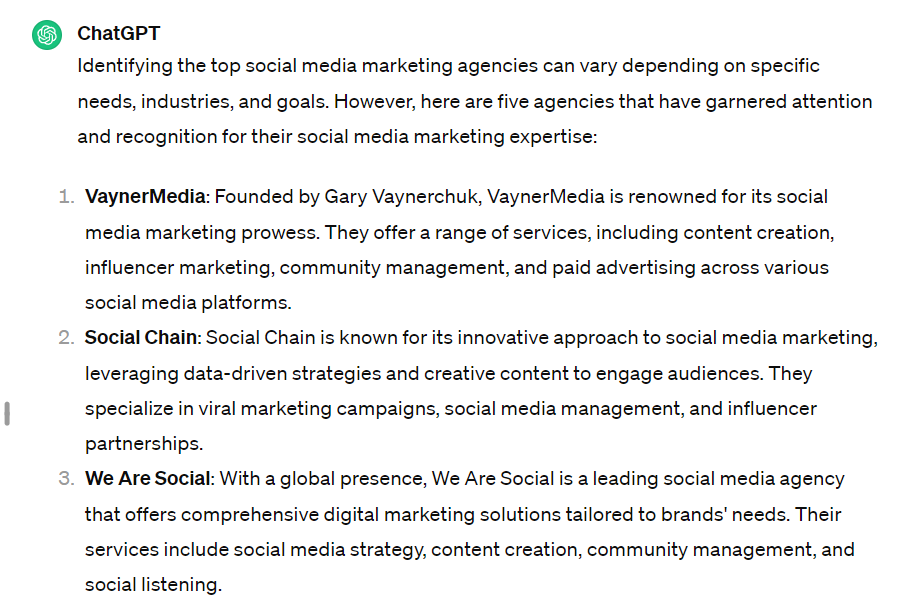
For instance, when I asked ChatGPT about the top social media marketing agencies, it recommended VaynerMedia as the top choice.
One of the reasons for this is that the VaynerMedia website targets a large number of social media-related service terms.
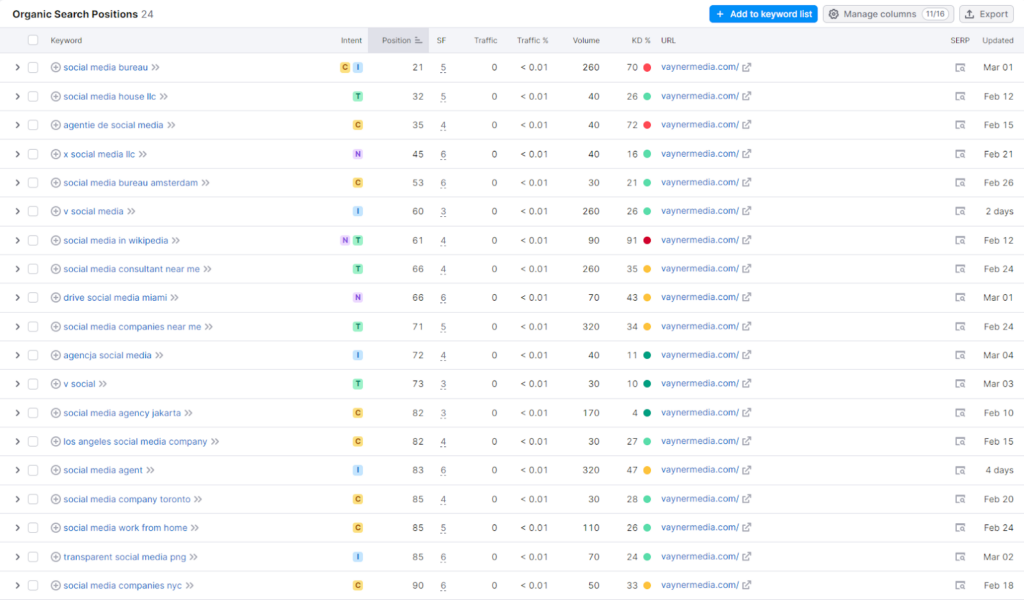
This indicates the more specific pages you create focused on a certain “term” or “topic” you want to be connected with, the more likely you are to be pinpointed by ChatGPT.
4. Company Age
Here’s an area where the difference between ChatGPT and ChatGPT Plus really stands out. When you ask the free version of ChatGPT to rank the “top agencies” or companies for something, it tends to focus on showing you companies that are older, and more established.
That’s something Neil Patel also found with his experiments.
Alternatively, if you ask ChatGPT Plus the same question, it’s less likely to focus on the age of the site, and concentrate more on its reputation in the current industry.
For instance, VaynerMedia was founded in 2009, but MomentIQ, recommended by ChatGPT Plus as a top social media agency, only launched in 2023:
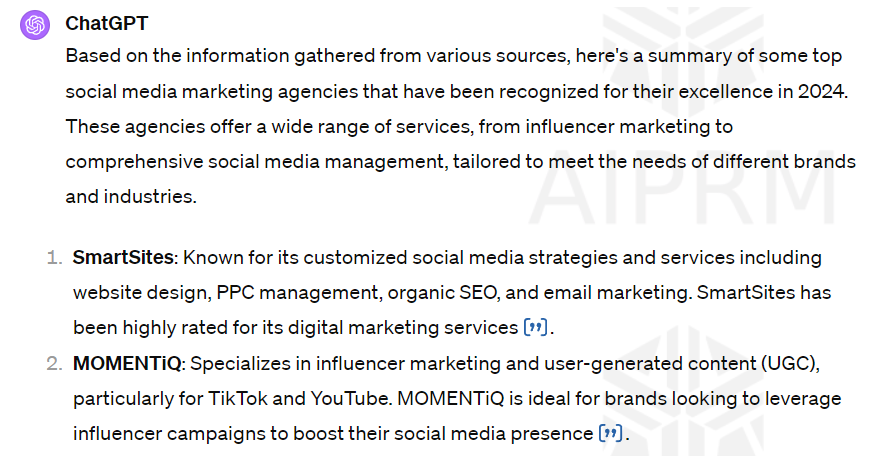
This leads me to believe that ChatGPT Plus is more focused on appearing relevant and up-to-date by recommending some of the most recent, and up-and-coming agencies. Whereas ChatGPT (the standard app), sees authority as being linked to age.
5. Authority
Finally, throughout my experiment, I noticed that ChatGPT, like Google, pays a lot of attention to authority.
It examines whether companies have “authority” by looking at various factors, such as their online reviews and ratings, industry reputations, and awards and recognitions they might have achieved. Since the app doesn’t have access to any tools for checking things like Domain Authority, I doubt this number factors in much here.
However, if you’re using the premium version of ChatGPT, it can check the internet for insights into the types of sites that also talk about the company, and make assumptions from there.
For instance, if we look at VaynerMedia we see it has all the markings of a “good authority” website, with 25.1k monthly visits, 13.4k backlinks, and 3.2k referring domains.
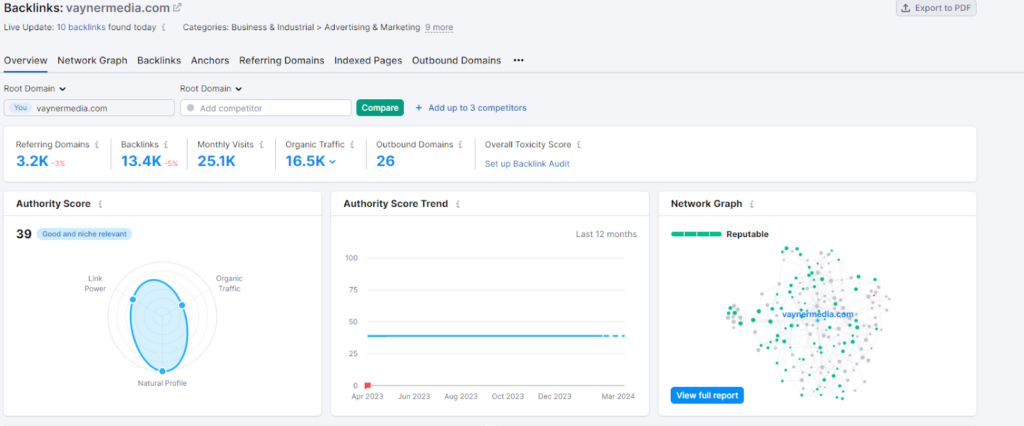
So, once again, I’d recommend making “authority” a priority when you’re learning how to rank your website on ChatGPT, or even if you’re just trying to boost your standard SEO scores.
How to Earn ChatGPT Website Traffic: What I’ve Learned
Ultimately, it seems like learning how to rank your website on ChatGPT isn’t all that different to learning how to boost your presence on the search engines. Following all the best-practices you would when creating content for Google, like showing authority, and highlighting a focus on exceptional customer service with reviews and recommendations still play a crucial role.
Just remember that ranking with ChatGPT isn’t an exact science.
I even asked the bot whether I’d have a higher chance of my company being recommended as a “Top NFT agency” if I followed all the steps above, and it still churned out a pretty generic response:
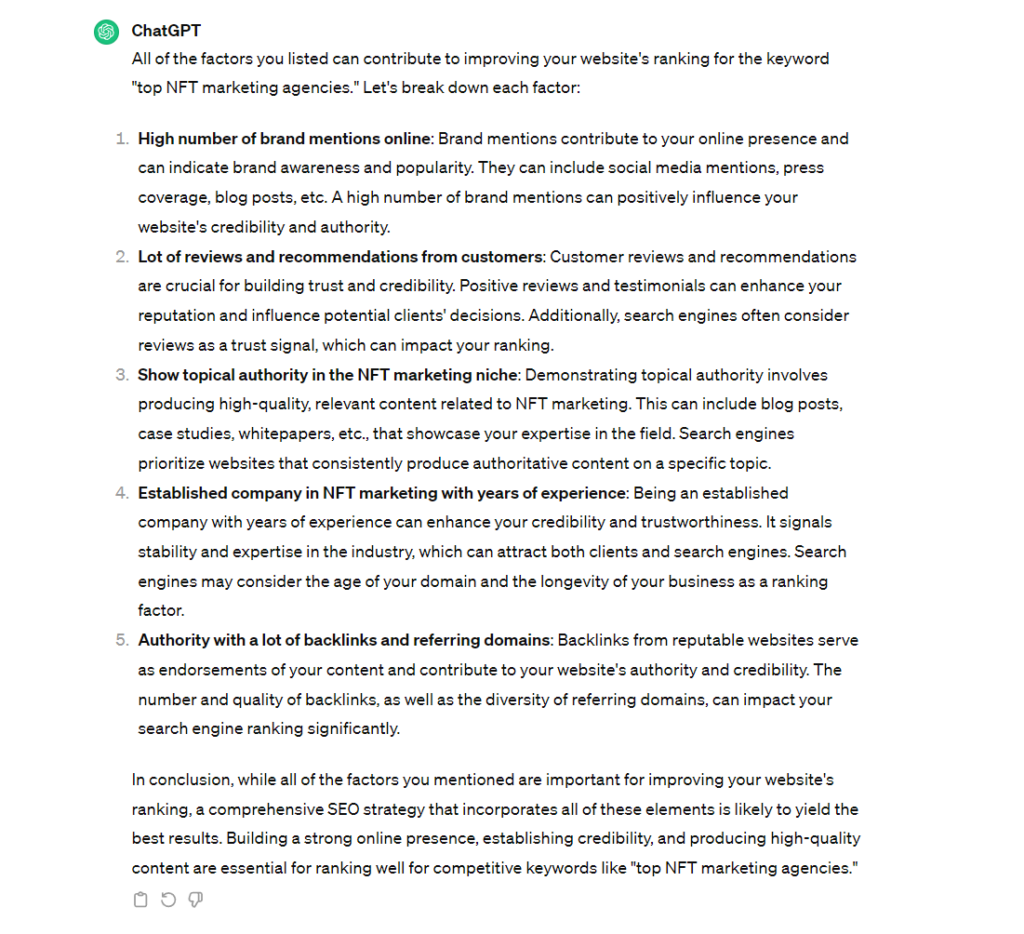
Ultimately, what I’ve learned from all this is that it is possible to use the same SEO strategies you’d use with Google to boost your chances of ChatGPT traffic. However it might not make sense to focus on “Ranking with ChatGPT” alone.
If you follow SEO best practices, your chances of gaining recommendations from ChatGPT should increase. But you’re going to need a holistic strategy.
